EnviroEx provides commercial pest control and bird proofing throughout Manchester, including the city centre, Cheetham Hill and Withington, for offices, food businesses, hotels, landlords and industrial units, with a home service alongside. We arrange a prompt survey, deal with rats, mice, insects and pigeons, and provide written reports for inspections. Book by phone or through our enquiry form.
What do busy city premises need?
Offices, hotels, restaurants and shops in a dense commercial area are usually housed in buildings that have been altered many times. Service risers, suspended ceilings and basements link units with different occupiers and different cleaning regimes, and a problem in one tenancy rarely stays there.
Facilities managers usually need more than a call-out: a numbered station plan, scheduled inspections and visit reports that satisfy an environmental health officer, a landlord’s building surveyor or a head-office auditor. That paperwork is the backbone of every commercial pest control contract we run in the city.
Why do rats cause trouble around commercial buildings?
Litter, bins left to overflow, dumped waste, empty buildings and open building works are all conditions rats can use. For a restaurant, bar or hotel kitchen, the practical point is that activity frequently begins outside the four walls: in a shared yard, a commercial bin store or a void running behind a row of units.
Our rat and mouse control work therefore starts with the route, not the kitchen, and the findings go into a report the business can file with its food safety records. Where the cause sits with a neighbour, a landlord or a drain, we say so in writing.
How do rivers, canals and drains shape rodent routes?
Where a property has a canal, river or culvert nearby, brown rats can use the banks and the damp, sheltered edges as travel routes. They are strong swimmers and burrow into banks, so any premises with a waterside boundary needs perimeter monitoring as well as internal checks.
Proofing low-level openings on the water side of a building is often the single most useful repair, and rodenticide has to be kept well away from anywhere it could reach the water. Shared drainage runs in older terraces can also let rats move from one property to the next, so a drain survey is worth asking for if problems keep returning.
What are the rules on pigeons and bird control?
Every wild bird has protection under the Wildlife and Countryside Act 1981, and the general licence for feral pigeons expects non-lethal options such as proofing to be tried or ruled out before birds are killed. Lethal control can also cost an organisation public trust if it is handled badly.
Our bird control and proofing service draws up exclusion for hotels, offices and residential blocks, from netting and spikes to post-and-wire, with a method statement your building manager can sign off. On historic or listed frontages we favour discreet systems that leave the building looking unchanged.
What do food businesses need to show?
Food businesses handling dry goods in bulk face mice and stored-product insects as well as rats, and an inspector will want to see how each risk is controlled. We set up monitoring that matches the stock and the building, and leave records that fit the business’s food safety management paperwork.
Signs to look for include droppings along walls and behind equipment, gnawed packaging, fine dust or webbing in dry goods and small moths or beetles around storage. If you see any of them, keep the affected stock apart, note the date and call us before the next inspection rather than after it.
Flats, rented homes and shared houses
Shared bin stores, risers and communal kitchens are where problems take hold in blocks and houses in multiple occupation, and responsibility for them usually sits with the landlord or managing agent. Tenants should report pests in writing and keep a copy, with dates and photos where possible.
Where tenants, HMO common parts and letting agents are involved, the landlord service we run handles access, reporting and the paper trail, so that treatment is not delayed by questions over who is responsible.
Homes across the rest of the city
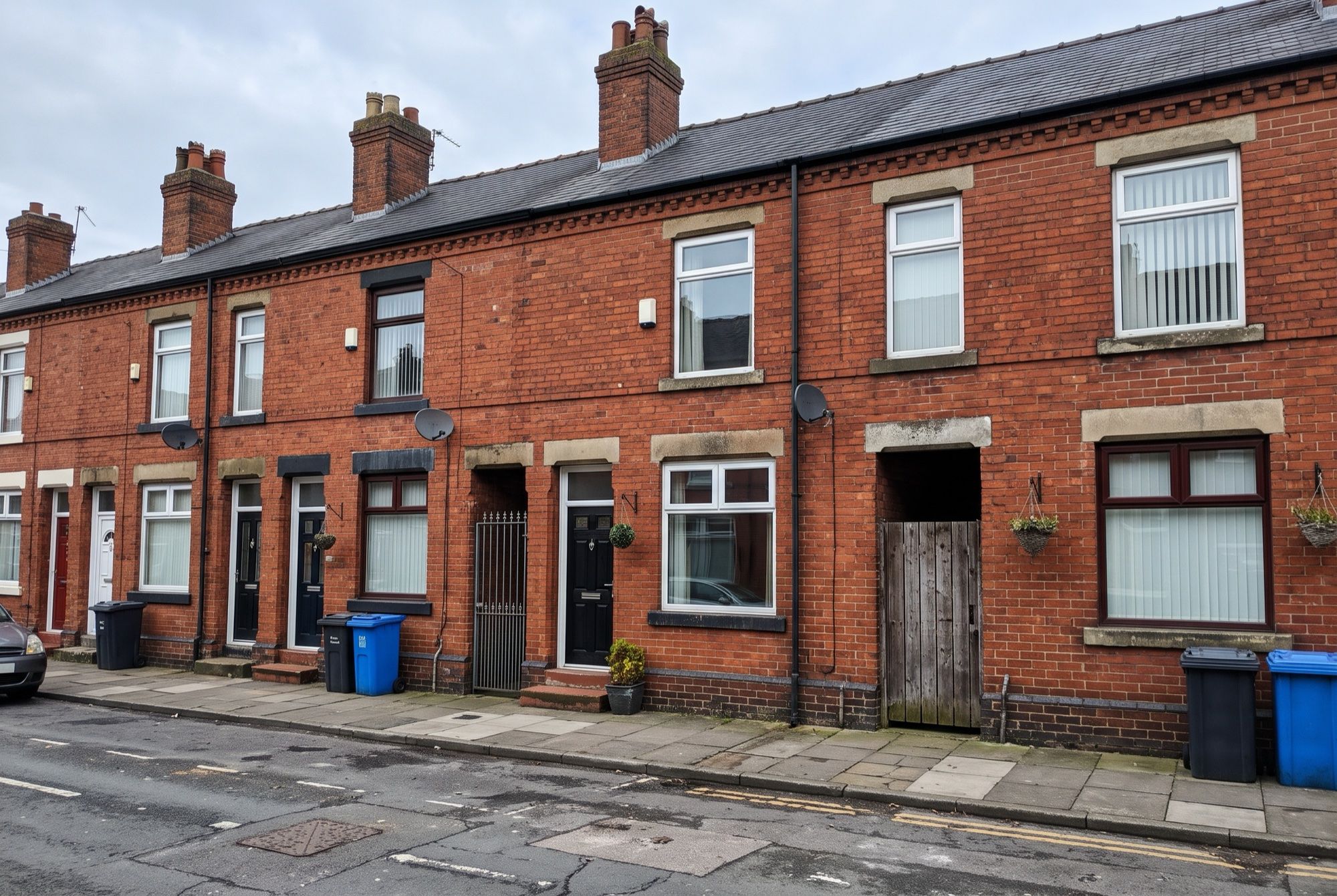
Older terraced rows commonly share drainage runs that rats can use to move from house to house, and semi-detached homes share a party wall and loft that mice can pass through. Autumn is when many rodent problems begin, as rats and mice move in from gardens, parks and drains looking for warmth and food.
Council tenants should contact their landlord first, and private tenants should report problems to theirs. For owner-occupiers, check airbricks, pipe gaps and the gap under the back door, keep food in sealed containers and call us if you hear scratching in walls or the loft.
What does Manchester City Council offer?
Many councils offer a pest control service for residents, but which pests are covered, who can book and what it costs all vary and can change. Check the council's own pest control pages for current details before you book, and if you rent, ask your landlord who is responsible for treatment.
See the council's pest control page (checked 2026-10-24).
Our services in Manchester
Rat & Mouse Control in Manchester
In dense commercial areas, shared yards, culverts, basements and linked voids mean the route in has to be traced and proofed, not just baited at one point.
Bird Control & Proofing in Manchester
Proofing ledges, canopies and roofs is the safer first choice for city buildings, legally and reputationally, because lethal control of pigeons is tightly restricted.
Commercial Pest Control in Manchester
Offices, hotels and late-night venues in one block often share risers, basements and yards, so contracts need numbered station plans and reports that cover the whole building.
Food Premises Pest Control in Manchester
Food businesses of every size need monitoring records that are ready for an environmental health visit, and kitchens that back onto shared bin stores need extra attention.
Pest Control for Landlords in Manchester
Where properties are let, bin stores, risers and common parts of shared houses are where a landlord's pest duties usually bite, so a written inspection record helps.
Also available in Manchester:
Pest control in Manchester: your questions answered
Why do rats cause problems in a city centre?
Rats look for food, shelter and quiet routes. Overflowing or poorly managed bins, dumped waste, derelict or empty buildings and building works can all suit them, and older buildings with linked basements and voids give them a way to move between premises. Lasting control means tracing and proofing those routes rather than baiting inside a single unit, and fixing waste handling at the source.
What pest records should a food business keep for an inspection?
Keep enough to show how pests are kept out and how you would spot them early. That usually means a plan of the site showing each numbered monitoring point, a dated report from every visit setting out what was found and done, and a note of when recommended repairs were finished, whether a door brush, a sealed pipe gap or a new drain cover. Businesses handling dry goods in bulk should add goods-in checks for stored-product insects alongside rodent monitoring. We write each report so it can be filed straight into the food safety documents you already keep, whether a HACCP plan or Safer Food, Better Business.
We manage a block of flats in Manchester. Which pest issues should we plan for?
Mostly the shared spaces. In purpose-built blocks, rodents tend to start in the bin store, plant rooms and service risers before reaching individual flats, while pigeons settle on balconies and roofs. For buildings let as HMOs, the management regulations expect common parts to be kept in repair and suitable refuse storage to be provided. A scheduled inspection of common areas, with a short report after each visit, gives you evidence to show residents and the freeholder.
Do you cover Cheetham Hill, Withington and the Northern Quarter as well as the city centre?
Yes. Our Manchester work spans the whole City Council area, from offices, hotels and kitchens in the centre to residential blocks, food businesses, terraces and student lets elsewhere in the city. We also work in the other Greater Manchester boroughs, such as Salford, Trafford and Stockport, so a firm with premises in more than one borough can use a single contractor and keep one set of records.
Should I use the council's pest service or a private contractor?
It depends who you are. Councils that run a pest service usually charge for it, and the pests covered, fees and terms vary, so check the council's current pages before you commit. Council tenants may have a different arrangement from other residents, so ask when you get in touch. Businesses that need a contract and audit records, and landlords who need reports for their files, usually appoint a private contractor.
Our home is let by a housing association, not the council. Who deals with pests?
Report the problem to your landlord first and check your tenancy agreement for how pests are handled. If pests are getting in because of disrepair, for example a broken drain or gaps round pipework, the landlord's repairing duties usually apply, and a serious infestation linked to the condition of the home may mean it falls short of the Homes (Fitness for Human Habitation) Act 2018.
Are some parts of the city worse for rats than others?
Activity depends more on the individual street, building and waste arrangements than on the postcode. Homes beside parks, canals and large green spaces, and properties with poorly managed bins nearby, tend to see more. Whatever the area, keeping drains, airbricks and pipe gaps in good order and bins closed is the most reliable way to reduce the risk.
Areas within Manchester
Sources (1)
Last updated: