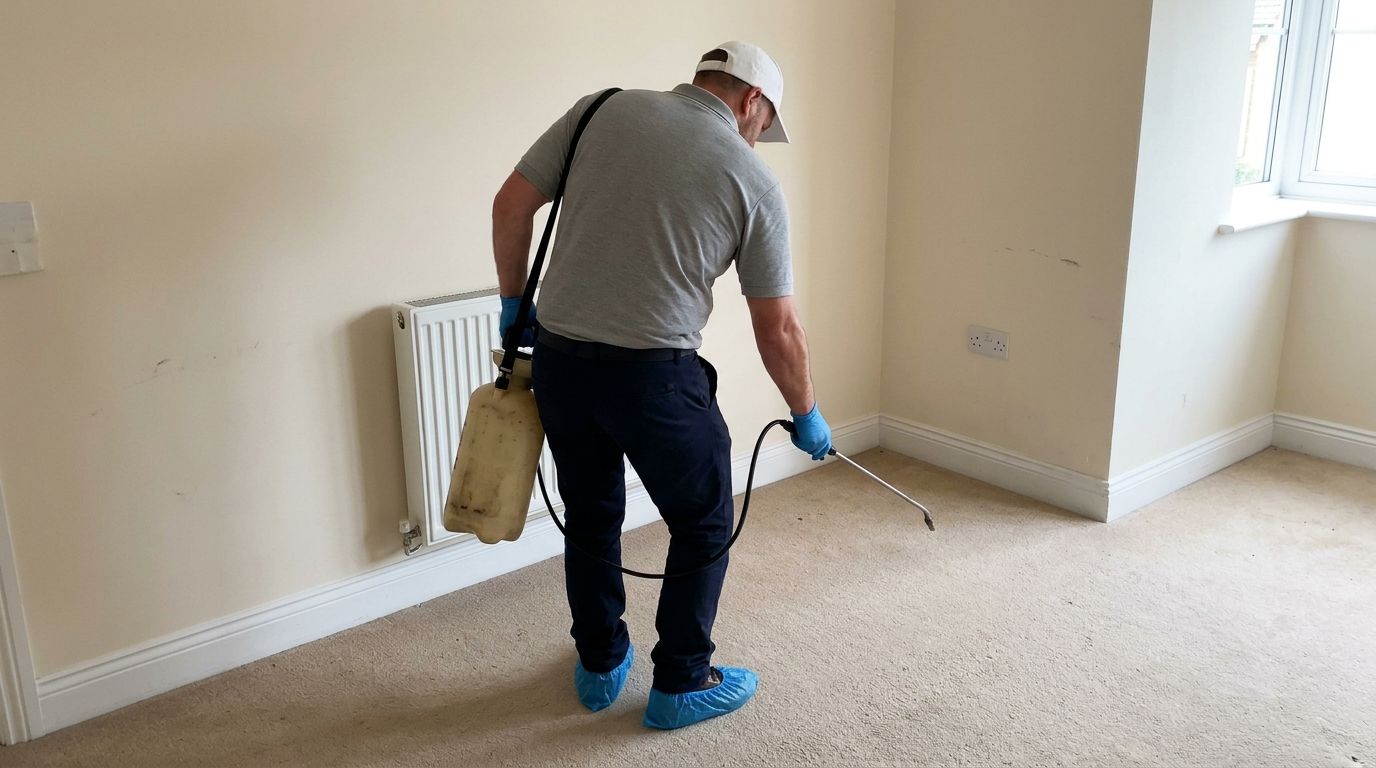
EnviroEx treats flea infestations in homes, rented flats, HMOs and void properties across Manchester and Greater Manchester. A technician confirms the source, whether pets, a previous occupant's animals or bird nests, applies a residual treatment to floors and pet resting areas, and gives written preparation and aftercare advice. Call or send an enquiry to book a prompt visit.
How can you tell it is fleas and not something else?
Flea bites usually appear as small, intensely itchy red spots, often in clusters around the ankles and lower legs, because that is as high as a newly emerged flea can easily reach from the floor. A pet that is scratching, over-grooming or thinning around the base of the tail is the other early clue.
Two simple checks help before anyone books a treatment:
- The white sock test. Walk slowly across carpets and rugs in white socks, especially in rooms where pets sleep. Adult fleas jump on and show up as dark specks that move.
- The flea dirt test. Comb your pet over damp white kitchen paper. Flea droppings are digested blood, so the black specks smear reddish-brown when wet.
If nobody keeps pets and bites appear mainly on the arms, neck and shoulders after a night in bed, bed bugs are more likely; our bed bug treatment page explains the difference. Bird mites from nests on the building can also bite in rooms close to the roof. The identification matters, because the treatment and who is responsible both depend on it.
Why do fleas take hold in Manchester homes and rented property?
Most domestic infestations involve the cat flea, which lives on dogs as readily as on cats and will bite people when it can. The adults on the animal are only a small part of the picture. Eggs fall into bedding, carpets and floorboard gaps, larvae feed on debris and flea dirt there, and then spin a cocoon. Inside it the flea completes its development, and the new adult can stay put for weeks or months until vibration, warmth or exhaled carbon dioxide signals that a host is nearby.
That waiting stage explains a common call from renters: a household moves into a flat that has stood empty since the previous tenant left with their cat, and within days everyone is being bitten. Nothing was visible at the viewing because the fleas were still in their cocoons.
Much of Greater Manchester’s older housing suits fleas well. Victorian and Edwardian terraces often have suspended timber floors: larvae shelter in the gaps between boards, beyond the reach of a vacuum cleaner, and fitted carpet laid over them adds a warm, undisturbed layer. Central heating keeps the life cycle going through winter, so activity that builds over summer often peaks in autumn, as the heating goes on and pets spend more time indoors.
The rental market adds to it. Empty periods between lets give dormant pupae their opportunity, and since 1 May 2026 the Renters’ Rights Act 2025 has given private tenants in England the right to ask to keep a pet, which a landlord must not unreasonably refuse. More pets in rented homes makes pre-let checks and clear records more important.
Not every flea problem starts with a pet. Pigeons nesting in roof voids, behind solar panels or on apartment balconies carry bird fleas, which look for a new host once the young leave the nest, often coming in through a loft hatch or top-floor window. Rats and mice bring their own fleas too, so we look for rodent activity when a home without pets has a persistent problem.
How does our flea treatment work?
Every job starts with an inspection to confirm the insect, find where larvae are developing and identify the source. Treating rooms without dealing with the source is the usual reason fleas come back.
Before the treatment visit you receive written preparation guidance. The most useful step is a thorough vacuum of every floor, under furniture and along skirting boards, because it lifts eggs and larvae and the vibration encourages pupae to hatch. Pet bedding goes through a hot wash, and floors are cleared so the treatment reaches the whole surface.
On the day we apply a residual insecticide, often combined with an insect growth regulator that stops larvae becoming adults, across carpets, floorboard gaps, skirting edges, under furniture and wherever pets rest. Where bird fleas are involved we also treat the loft or eaves and advise on clearing the nest and closing the access point.
Pets must be treated in the same week with a product your vet recommends; otherwise they keep bringing adult fleas back into treated rooms.
Is flea treatment safe for children, pets and tenants?
Applied as the label directs, with the re-entry advice followed, the risk is low. The main control is time: everyone, pets included, stays out of treated rooms until surfaces have dried, usually a few hours, and we confirm the re-entry time for the product before we start. Crawling children and pets that lie on the floor should come back only once floors are fully dry. Fish tanks are covered with pumps switched off, and caged birds, reptiles and small animals moved somewhere untreated.
For the pets themselves, follow your vet’s advice and the product label. Some flea products made for dogs contain permethrin, which is highly toxic to cats, so never use a dog treatment on a cat or let a cat groom a freshly treated dog.
In rented homes and HMOs, tenants get their preparation and aftercare instructions in writing.
How many visits does flea treatment usually take?
Most homes need one treatment visit. A follow-up after roughly two to three weeks is common where the infestation was heavy, where the property had stood empty before people moved in, or where adult fleas are still emerging.
Seeing some fleas for a couple of weeks after treatment is normal: pupae protected by their cocoons keep hatching, and the new adults die after crossing treated floors. Vacuuming, once the no-vacuum period has passed, brings them out sooner. If numbers are rising rather than falling after around three weeks, call us back.
HMOs, blocks with shared corridors and bird-flea jobs often justify a planned second visit from the outset.
How do you stop fleas coming back?
Prevention is mostly about the host:
- Keep pets on year-round flea protection recommended by your vet, rather than reacting once bites start.
- Hot-wash pet bedding regularly and vacuum where pets rest, including stairs and room edges.
- If you let property, book a flea check when a pet-owning tenant leaves, before the void, not after the next tenant reports bites.
- Proof the building against birds and rodents. Clearing old nests and closing gaps in soffits, eaves and roof coverings, as described on our bird control page, removes the source of bird fleas; sealing rodent entry points does the same for rats and mice.
When does DIY flea control stop being enough?
A single pet, caught early, can often be dealt with by vet-recommended treatment, careful vacuuming and hot washing. It is time to bring in a professional when:
- bites continue more than two or three weeks after the pets were treated
- there are no pets in the house and the source is unclear
- you have moved into a property and have been bitten from the first few days
- several rooms, flats or HMO bedrooms are affected
- there is a baby, an older person or someone with a skin condition in the home
- a landlord, letting agent or managing agent needs a dated report
Shop-bought foggers are where DIY most often falls short: the mist settles mainly on exposed surfaces and misses the floorboard gaps, skirting edges and under-furniture areas where larvae and pupae develop.
What should landlords and managing agents record?
Responsibility depends on where the fleas came from. An infestation present at the start of a tenancy, or arising from the building itself, is normally the landlord’s to resolve: pests fall under the domestic hygiene, pests and refuse hazard in HHSRS, and the Homes (Fitness for Human Habitation) Act 2018 lets tenants take court action over a home that is unfit to live in. Where birds are getting into the roof through a damaged soffit or missing slates, that repair will usually fall under section 11 of the Landlord and Tenant Act 1985. Fleas from a tenant’s own pet are more often the tenant’s responsibility, depending on the agreement.
Under the Tenant Fees Act 2019, making a tenant pay for professional flea treatment as a condition of keeping a pet is generally a prohibited payment, although the reasonable cost of putting right an infestation caused by a breach of the tenancy can usually be claimed with evidence. Keep check-in and check-out reports, dated photographs, the tenant’s pet request and your reply, a note of when the problem was raised, and the technician’s report.
Our report records what we found, the likely source, what was treated and the advice given, which is the kind of evidence a deposit scheme adjudicator or council housing officer is likely to ask for. Our pest control for landlords page covers void inspections and wider duties. If responsibility is disputed, take advice on the specific tenancy.
How flea treatment works with EnviroEx
- 1
Inspection and source
We confirm the insect is a flea rather than a bed bug or bird mite, find where larvae are developing and identify the host: a resident pet, a previous occupant's animals, a bird nest or rodents.
- 2
Written preparation brief
You receive a checklist covering vacuuming, hot-washing pet bedding, clearing floors, arranging vet-recommended treatment for pets and planning for people and animals to be out.
- 3
Residual treatment
We apply a residual insecticide, often combined with an insect growth regulator, to carpets, rugs, floorboard gaps, skirting edges, under furniture and pet resting areas, plus the loft or eaves where bird fleas are involved.
- 4
Re-entry and aftercare
Everyone stays out until treated surfaces are dry. We tell you how long to leave floors unvacuumed and explain why a few fleas may still appear as pupae hatch.
- 5
Follow-up and report
Where fleas are still emerging we return after two to three weeks. You receive a dated report of the source, the areas treated and our recommendations, ready for landlord or tenancy records.
Typical visits: Most homes need one treatment, with a follow-up after two to three weeks if fleas are still emerging. Heavy, inherited, bird-flea and multi-occupancy infestations often need a planned second visit.
Safety: People and pets stay out of treated rooms until surfaces are dry, usually a few hours. Fish tanks are covered with pumps off and caged pets moved out. Pets need their own vet-recommended product; never use a dog flea treatment on a cat.
Flea Treatment: your questions answered
Why am I getting flea bites when I don't have a pet?
The fleas may have been left behind by a previous occupant's cat or dog. Their pupae can sit in carpets and floorboard gaps for months and hatch when new people move in. Other common sources are bird nests in the loft, eaves or on a balcony, rodents in the building, and pets visiting from next door or a neighbouring flat. Bites without pets can also be bed bugs or bird mites, so we confirm the insect and find the source before any treatment is planned.
We have just moved into a rented flat and are being bitten. Who should deal with it?
Tell the landlord or letting agent in writing straight away, with dates and photographs of the bites and any fleas you have caught. Where fleas were present when the tenancy began, the landlord is normally expected to arrange treatment: pests fall within the hygiene hazards assessed under HHSRS, and the Homes (Fitness for Human Habitation) Act 2018 requires a rented home to be fit to live in. The position can depend on the tenancy and the facts, but an early written report and a technician's view of the likely source usually make it much easier to resolve.
Do we have to leave the house during flea treatment?
You, your children and your pets need to stay out of the treated rooms until surfaces have dried, which is usually a few hours. We confirm the time for the product before we start, so you can plan the day. Cover fish tanks and switch off their pumps, and move caged birds, reptiles and small animals somewhere untreated. When you return, open the windows for a while and keep crawling babies off the floor until it is fully dry. Do not wash or vacuum the treated floors until the date we give you.
Why am I still seeing fleas after the treatment?
That is expected for a couple of weeks. Flea pupae sit inside a sticky cocoon that insecticide does not penetrate well, so they survive the treatment and keep hatching over the following days. When the new adults cross the treated floor they pick up the residual and die, usually before they can breed. Vacuuming after the no-vacuum period helps trigger them to hatch sooner. If you are seeing more fleas rather than fewer after about three weeks, or your pets have not been treated, call us so we can check and arrange a follow-up.
Is treating my cat or dog enough to get rid of fleas?
Usually not on its own. The adult fleas you see on a pet are a small part of the infestation; most of it is eggs, larvae and pupae in bedding, carpets and floorboard gaps. Treating the animal with a vet-recommended product stops it carrying fleas and laying new eggs, while the home treatment deals with what is already developing. Do both in the same week. Never use a dog flea product on a cat, because some contain permethrin, which is highly toxic to cats.
How should I prepare my home before flea treatment?
Vacuum every floor thoroughly on the day, including under beds and sofas, along skirting boards, on stairs and on upholstery, then empty the vacuum outside. Wash pet bedding, throws and cushion covers on a hot wash, at 60°C where the fabric allows. Clear toys, shoes and clutter off the floor so the whole surface can be treated, and lift out anything stored under beds. Arrange your pets' own treatment for the same week. We send a written checklist when you book, so every member of the household or every tenant knows what to do.
Can a landlord charge a tenant for flea treatment at the end of a tenancy?
Not as a blanket condition. Under the Tenant Fees Act 2019, requiring a tenant to pay for professional flea treatment because they keep a pet, for example through a compulsory end-of-tenancy de-flea clause, is generally treated as a prohibited payment. Where an infestation results from a breach of the tenancy, the landlord can usually claim the reasonable cost of putting it right from the deposit, but the deposit scheme will want evidence: check-in and check-out reports, dated photographs and a technician's report on what was found. Take advice on individual cases.
Could the fleas be coming from pigeons nesting on our building?
Yes, particularly in top-floor flats and houses with nests in the loft, the eaves or behind solar panels. Bird fleas live in the nest and go looking for a new host once the young birds leave, which can bring them indoors in numbers. We treat the affected rooms and roof space and advise on clearing the nest. Under the Wildlife and Countryside Act 1981 it is an offence to damage or destroy a wild bird's nest while it is in use or being built, so removal is normally timed for when the nest is no longer active, unless a general licence covers the situation. Proofing the access point then stops the cycle repeating.
Do you treat fleas in HMOs, hotels and other managed buildings?
Yes. In shared buildings fleas move between rooms on people and pets and along shared corridors, so we survey every affected unit and the common parts, then agree a treatment plan with the landlord, agent or facilities manager. Visits can be arranged around occupants, guests and room changeovers, with written instructions for each household or room. You receive a report covering each area treated, the likely source and the actions recommended, which sits in a property file or a housing provider's compliance records.
Flea Treatment by area
Local detail for the places we serve most often.
Last updated: