EnviroEx provides pest control and bird proofing for businesses, landlords and households across the Borough of Bury, including the town centre, Prestwich, Radcliffe and Ramsbottom. We treat rats, mice, wasps, cockroaches, bed bugs and pigeons, survey before we treat and leave written records after every visit. Phone or send an online enquiry to book a prompt survey.
What does pest control look like at Bury Market?
Bury Market’s first licence was granted in 1444, and its stalls are still associated with black pudding, the food the town is known for. For pest control, what matters is how a market works day to day: many food businesses trading close together, usually with shared bin points and delivery routes, where a problem on one pitch rarely stays on that pitch.
The market has also been through a major council transformation. Building work formally began in January 2025 on a scheme centred on a new flexi hall, with a café bar, office space and room for business and community use, and new roof canopies over the outdoor stalls; at the outset it was expected to finish in summer 2026. New and refitted space is the easiest point to get pest control right. Station positions can be planned into layouts, bin stores built to close properly, and canopy edges and ledges proofed before pigeons adopt them as a roost. Each trader, and whoever operates the café bar, needs pest-management records of their own, alongside whatever market management keeps for the common areas.
Shopping centres and listed buildings in the town centre
The town centre’s two main shopping developments are Mill Gate, which replaced an earlier concrete precinct in 1995, and The Rock, opened in 2010. Managed shopping centres tend to share familiar patterns. Mice move between units through ceiling voids and service corridors, rats are drawn to compactors and waste compounds, and pigeons settle on entrance canopies, signage and roof plant.
What shapes the job is the number of parties involved. A tenant, a centre manager and sometimes a separate facilities contractor each hold part of the picture, so we agree at the start who receives reports, where stations sit in shared areas and how building defects reach the person who can fix them.
The town centre has historic fabric too. The parish church on Market Place is listed Grade I, and proofing a listed building can need listed building consent, so we choose methods that can be removed without leaving damage and suggest a word with the council’s planning team before work begins. Our bird control service covers netting, post-and-wire and spikes for modern frontages and historic ones alike.
Mills and former industrial buildings
Bury’s industrial past rests on cotton, with seven mills in the town by 1818, together with paper-making, calico printing and light engineering. Peel Mills on Castlecroft Road is one mill still in use. In Radcliffe, a paper mill was founded beside the Irwell in 1860 and the town became known for the trade.
Large mill buildings are hard to seal. Deep roof spaces, loading doors, redundant pipe runs and old drainage under ground-floor units give rats and mice routes that a modern shed would not, and broken panes or open louvres let feral pigeons into upper floors. Where an old mill is divided between several occupiers, each with its own hours and housekeeping, one survey of the whole building, with findings reported unit by unit, works better than tenants treating in isolation. Our commercial pest control contracts are set up to run that way.
Prestwich restaurants, delis and the Longfield Centre
Several kosher restaurants and delis trade in the Sedgley Park area of Prestwich, and the high street mixes traditional venues with more upmarket bars and restaurants. Kitchens like these are inspected against the same hygiene law as any food business, and an environmental health officer will look for a pest-control procedure, dated visit reports and evidence that recommendations were acted on. We time visits around service and preparation, keep treatments away from food and food-contact surfaces, and lay out records so they slot into a HACCP plan or a Safer Food, Better Business pack. Our food premises pest control service sets out that documentation in more detail.
The Longfield Centre was earmarked for a large regeneration scheme, with work due to begin in 2024. Where redevelopment involves demolition or groundworks, established rats can be disturbed and move towards neighbouring yards and kitchens, so nearby businesses benefit from monitoring while a site is active.
Two rivers, a canal and the 2015 floods
The Irwell runs north to south through Bury and divides the town into east and west, and the Roch flows in from the east to join it near Blackford Bridge. The Irwell also splits Radcliffe into north and south, and the disused Manchester Bolton & Bury Canal runs through that town as well.
On Boxing Day 2015 both rivers reached their highest recorded levels. The Irwell overtopped in Summerseat, Ramsbottom and Radcliffe, South Bury and North Radcliffe had the most flooded properties, and culverts overloaded in Tottington and Black Lane; in all, 808 locations in the borough were affected. The Radcliffe and Redvales scheme, led by the Environment Agency with the council, has put more than 2.5 kilometres of defences along the Irwell, designed to protect up to 870 properties.
Floodwater fills burrows, carries silt into drains and can crack or shift old pipework, and rats driven off wet ground look for the nearest buildings. For premises on the river corridor, drains belong in any rodent survey, and after a spell of high water it is worth checking inspection chambers and ground-floor entry points before the colder months.
Homes across the borough
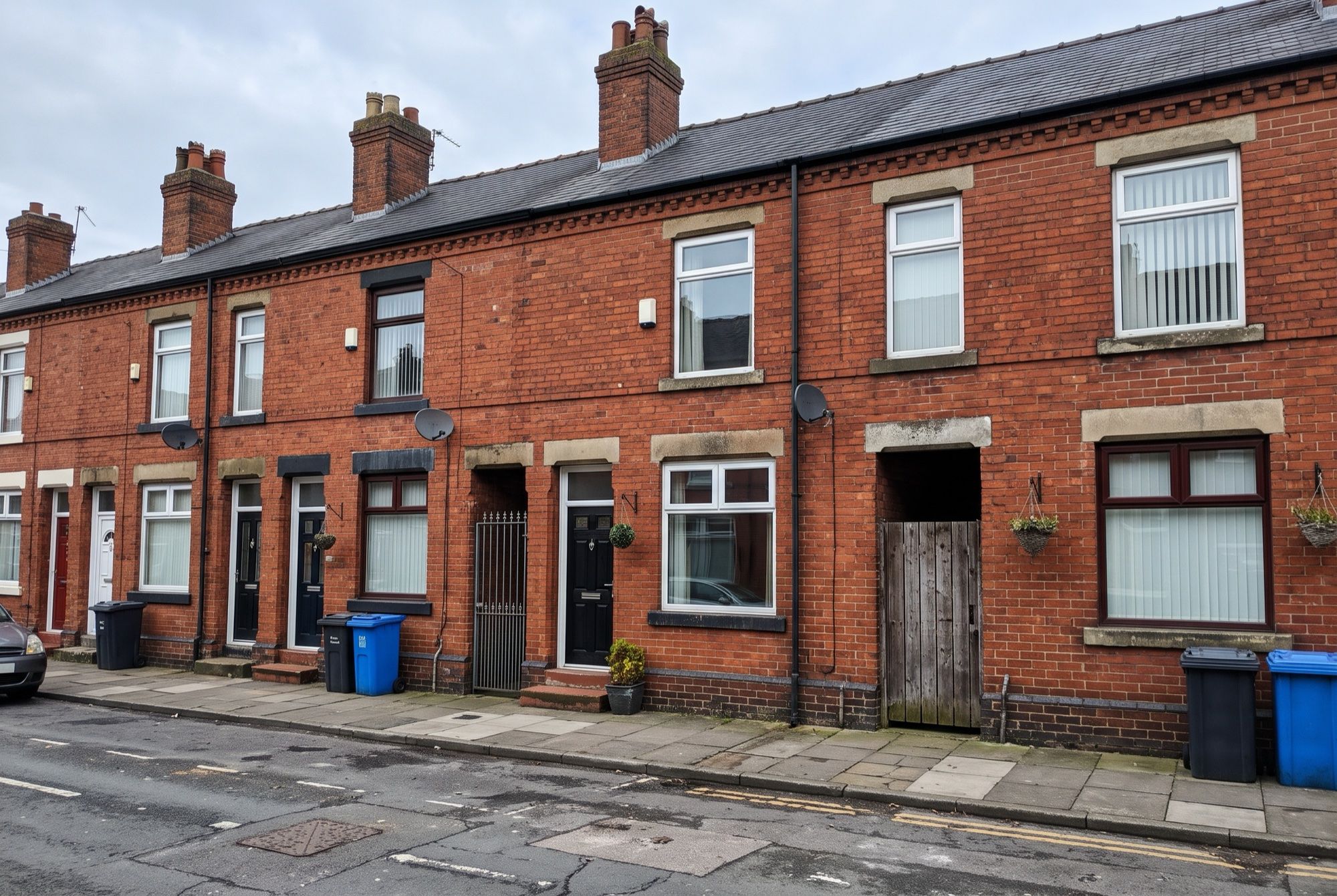
Bury’s housing has its own pest patterns. Terraced rows had ringed the town centre by the turn of the 19th century, and Freetown, Fishpool and Pimhole were farmland before terraces went up beside the mills. In rows like these, shared drains and linked roof spaces can let rodents travel from house to house. Prestwich grew differently. Manchester merchants built villas there after the railway arrived in 1881, later streets followed from the 1930s, and the villas’ larger roofs and timber soffits suit wasp queens in spring. Radcliffe’s homes are mostly semis and terraces, with newer estates on former industrial land, including the old Radcliffe Paper Mill Company site.
Further housing is planned. The Simister and Bowlee allocation is set to deliver 1,550 homes, 1,350 of them in Bury, and Peel L&P’s proposals for land west of Elton Reservoir allow for up to 3,500 between Bury and Radcliffe. Clearance and drainage work on that scale can push rats into existing gardens and yards nearby.
For rented homes, our pest control for landlords service handles tenant reports, access arrangements and the paperwork that shows a problem was dealt with properly.
What does Bury Council offer?
At the time of checking, Bury Council's pages describe a paid pest control service for homes and commercial properties, with nothing on its list offered free. Residents book and pay online; rats and mice are charged as a block of visits and wasps per nest, and some domestic services are discounted for people receiving Council Tax support. Businesses can ask through an online form for a one-off treatment or a contract of regular inspections, and the council states a standard of survey or treatment within one working day. It does not treat bats, bees, foxes, moles or mink. Current charges are on its 'Check fees and charges' page.
See the council's pest control page (checked 2026-10-24).
Local context that shapes pest problems in Bury
- Bury Market's original licence dates from 1444, so it has been trading for almost six centuries, and its stalls are noted for black pudding, the food the town is known for. [Wikipedia (Bury, Greater Manchester)]
- A ceremony on 21 January 2025 marked the start of building work on the Bury Market transformation, which adds a flexi hall with a café bar, office space and room for business and community use, plus new roof canopies over the stalls; the council's announcement expected the work to be finished in summer 2026. [Bury Council]
- Two developments anchor the town-centre shops: the Mill Gate Shopping Centre, which replaced an earlier precinct in 1995, and The Rock, which opened in 2010. [Wikipedia (Bury, Greater Manchester)]
- Cotton, with seven mills in the town by 1818, sat alongside paper-making, calico printing and light engineering in Bury's industrial past, and Peel Mills on Castlecroft Road is still in use. [Wikipedia (Bury, Greater Manchester)]
- Several kosher restaurants and delis trade in the Sedgley Park part of Prestwich, while its high street has upmarket bars and restaurants alongside traditional venues. [Wikipedia (Prestwich)]
- Running from north to south, the Irwell separates the east and west sides of Bury, and the Roch meets it near Blackford Bridge, arriving from the east. [Wikipedia (Bury, Greater Manchester)]
- On Boxing Day 2015 the Irwell overtopped in Summerseat, Ramsbottom and Radcliffe and culverts in Tottington and Black Lane were overwhelmed; the council counted 808 affected locations, with the most flooded properties in South Bury and North Radcliffe. [Bury Council]
- Led by the Environment Agency in partnership with Bury Council, the Radcliffe and Redvales Flood Defence Scheme raised upwards of 2.5 km of defences beside the Irwell, designed to shield as many as 870 properties. [Bury Council]
- The Manchester Bolton & Bury Canal, fully open from 1808 and now disused, runs through Radcliffe, which the Irwell also divides into north and south. [Wikipedia (Radcliffe, Greater Manchester)]
- Councillors in Bury voted in July 2014 to empty grey bins only every third week from that October, making it the first English council to do so, and the move drew objections from some residents. [letsrecycle.com]
Our services in Bury
Rat & Mouse Control in Bury
The Irwell divides Bury east from west, the Roch joins it near Blackford Bridge and 808 locations in the borough were affected by the Boxing Day 2015 floods, so drains, outfalls and riverside boundaries are part of our rodent surveys on sites near the water.
Wasp Nest Removal in Bury
Bury Market's outdoor stalls and Prestwich's bars and restaurants draw foraging workers in late summer, while Prestwich, with its railway-era villas as well as Forest Park and the Clough woodland, gives spring queens both large roofs and nearby cover.
Bird Control & Proofing in Bury
Canopies over the market's outdoor stalls, shopfronts at The Rock and Mill Gate and mill buildings such as Peel Mills offer pigeons ledges and roof space, and listed buildings such as the Grade I parish church on Market Place need fixings that come out cleanly.
Food Premises Pest Control in Bury
Bury Market's food traders, the café bar included in the market scheme and the kosher restaurants and delis of Sedgley Park each need pest-management records an environmental health officer can follow.
Commercial Pest Control in Bury
Units at Mill Gate and The Rock, and older mill buildings such as Peel Mills, can involve a landlord, a managing agent and several occupiers, so one station plan, one report format and bird proofing on the same contract keep everyone working from one record.
Pest Control for Landlords in Bury
Terraced rows around the town centre, such as those in Freetown, Fishpool and Pimhole, often share drain runs, so a rat report in one rented house can mean checking next door and logging any drain repair in the tenancy file.
Also available in Bury:
Pest control in Bury: your questions answered
Do you cover Prestwich, Whitefield, Radcliffe and Ramsbottom as well as Bury town centre?
Yes. We cover the whole borough: BL8 and BL9 around the town centre, Tottington, Walmersley and Summerseat; BL0 and BL8 around Ramsbottom; M26 for Radcliffe; M45 for Whitefield; and M25 for Prestwich, Sedgley Park and Simister. Businesses with sites over the boundary in Manchester, Salford or Rochdale can keep every address on one contract, with the same station plans and report layout at each.
Is Bury Council's pest control free for anyone?
Not at the time of checking. The council's fees page lists a charge, or a quotation, for every service it offers, rats, mice and wasps included. Some domestic services are discounted for residents who receive Council Tax support, though the page says this does not extend to single person benefit. Rats and mice are priced as a block of three visits, wasps per nest, and fleas and bed bugs by the number of bedrooms. Charges and eligibility can change, so check the council's current fees page before booking.
Why would a Bury business use a private contractor instead of the council's contract?
Speed is not the main difference, since the council states a standard of survey or treatment within one working day. The usual reasons are scope and paperwork. A food business that also needs pigeon netting over a yard, wasp nests treated under the same agreement, or reports laid out for a HACCP file, a retailer audit or head office may prefer one contractor for all of it. Operators with branches in neighbouring boroughs often want one format at every site. The council's business service suits many premises, and asking both for a survey is a fair way to compare.
We trade at Bury Market. What pest-control records should we keep?
Treat your stall or unit as a food business in its own right. Food hygiene law requires food businesses to have adequate procedures for controlling pests, so keep a simple file: who inspects, a plan of any stations or monitors on your pitch, dated visit reports, products used and what you did about each recommendation. Keep copies of anything market management shares about common areas, bin stores and canopies. An inspector will want to see that you understand your own risks and can show how they are controlled.
Our premises are near the Irwell in Radcliffe. Do the flood defences reduce rat problems?
Not directly. The Radcliffe and Redvales defences are designed to protect up to 870 properties from high water, which may mean fewer flood-damaged drains in the protected area, but rats live along riverbanks and in the drainage network whatever the river level. Sites near the water should still have drains and boundaries included in any rodent survey, keep inspection chambers sealed and check ground-floor entry points after heavy rain. Where activity keeps returning, a CCTV survey of the drains is the next step.
Can pigeons be proofed out of a listed building or an old mill in Bury?
Yes, with care. Bury Parish Church on Market Place, for example, is Grade I listed, and fixing netting or spikes to a listed building can need listed building consent, so check with the council's planning team before work starts. We favour fixings that go into mortar joints or existing features and come out cleanly. On mill buildings, deep ledges and open louvres usually need netting or mesh. Under the Wildlife and Countryside Act 1981 the nests of wild birds, feral pigeons included, are protected while in use unless a licence applies, so we time proofing so that no active nest is shut in.
Bury moved to three-weekly grey bin collections. Does that matter for rats?
In 2014 Bury became the first council in England to approve a three-weekly grey bin cycle, and not every resident welcomed it. Collection arrangements can change, so check the council's current schedule. What draws rats is not the cycle itself but overflowing bins and bags left beside them. Landlords of shared houses should make sure bin capacity suits the number of occupants, and businesses should keep commercial waste in lidded containers away from doors.
Nearby areas we cover
Sources (8)
Last updated: