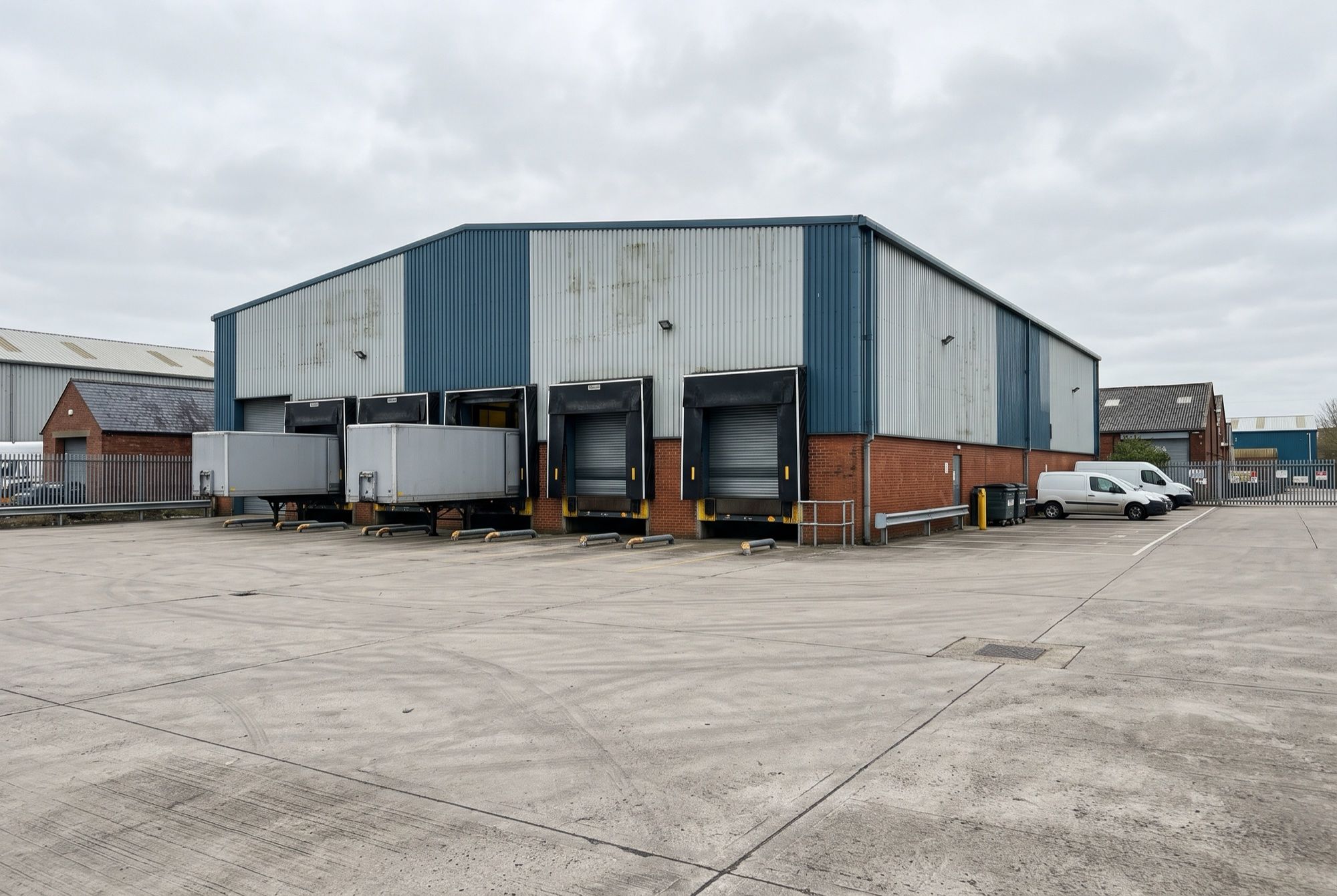
EnviroEx works with factories, warehouses, food producers, hotels, offices, landlords and householders across Trafford Park and Old Trafford, including Wharfside, Trafford Park Village and Ayres Road. Rats, mice, stored-product insects and roosting pigeons are surveyed first, then treated or proofed, with a written report after each visit. To book a prompt survey, phone us or send an enquiry.
Why does the world’s first planned industrial estate need its own approach?
Trafford Park is often described as the world’s first planned industrial estate, and it remains large and busy: 4.7 square miles, home in 2025 to around 1,400 businesses and 40,000 workers. Pest control here is mostly commercial. Factories, food producers, freight operators and the offices that sit alongside them need scheduled monitoring and a paper trail far more often than a single call-out.
Food has been part of the estate’s story since at least 1903. That year the Co-operative Wholesale Society built a flour mill and packing works on land at Trafford Wharf. Kellogg’s followed in the 1930s, and Brooke Bond had its own factory here. Flour, cereals and packaged goods attract rodents, while moths and beetles that feed on stored products can arrive with ingredients or returned stock. Food sites usually need a scheduled contract with a numbered station plan, trend reporting and records that survive a customer audit or an environmental health visit.
Freight brings its own risks. The Euroterminal, a rail freight terminal, opened in 1993; goods arriving by rail and road come with pallets and packaging that can carry mice in. Roller doors left open through a shift, racking tight against walls and cardboard baled in yards all give rodents cover. Our commercial pest control contracts set visit frequency by risk, so a chilled food store and a parts warehouse are scheduled differently.
How do the canals shape rat activity on the estate?
Canals enclose almost all of Trafford Park. The Manchester Ship Canal forms its north-eastern and north-western edges, with Salford Quays on the far bank, and the Bridgewater Canal closes off the two southern sides. Most of the boundary is therefore bank, culvert and waterside vegetation, and brown rats swim well and dig readily into soft ground near water.
Inside the estate, Trafford Ecology Park covers 11 acres where the park’s ornamental boating lake once was. Designated a Local Nature Reserve in 2007 and looked after by Groundwork Greater Manchester, it is habitat to protect rather than a problem to solve, although scrub and water margins near any green space give rodents somewhere to live close to the units that back onto them.
For premises on these edges, the work starts at the fence line: drainage, interceptors and rodding points, burrows along boundaries and docks, and tamper-resistant external stations where the risk assessment justifies them. Rodenticide use follows the product label and CRRU UK stewardship guidance, under which permanent baiting is the exception and needs a documented reason; non-toxic monitoring blocks show when activity returns. Our rodent control service sets out the full treatment process.
What can hospitality operators learn from the stadium?
Old Trafford has two major sports grounds: Manchester United’s stadium and the cricket ground, home to Lancashire County Cricket Club since 1857. The football ground lies alongside the Bridgewater Canal near the northern end of Warwick Road, Manchester United Football Ground station adjoins the Sir Bobby Charlton Stand, and Hotel Football faces the stadium from the far side of the canal on Sir Matt Busby Way.
In May 2025, Football365 reported that a mid-April environmental health inspection had found evidence of mice in seven separate areas of the stadium, hospitality suites among them, including droppings beneath a buffet bar. The ground’s food hygiene rating stayed at two stars, where it had fallen from four the previous November.
The lesson is not about one club. Big venues have kitchens, bars and suites that sit quiet between events and then serve thousands of people in a few hours. Mice move into undisturbed space quickly, and droppings under fixed bars, behind banqueting equipment and in dry stores are easy to miss until an inspector lifts a panel. Hotels, function rooms and contract caterers nearby work to the same rhythm. Our food premises pest control service schedules checks around event calendars and records every visit, which is the evidence an officer assessing confidence in management will ask to see.
Where do pigeons settle around the estate and the ground?
Wide portal-frame roofs, loading canopies, rail freight yards and canal-side warehouses give feral pigeons dry ledges close to wherever goods are handled outdoors. On the estate, the usual complaints are birds roosting inside canopies over dock doors, nesting on roof plant and fouling stock, racking or forklift routes. At the Old Trafford end, stands, hotel signage and frontages on busy walking routes offer similar ledges where footfall is heaviest.
Bird control here usually means netting canopies and plant decks, fitting spikes or post-and-wire to ledges and signs, and cleaning off fouling before anything is fixed. The Wildlife and Countryside Act 1981 protects wild birds’ nests while they are being built or in use, so the survey checks for active nests before any area is enclosed. On food sites, a bird in a goods-in bay belongs in the HACCP pest records, not just the cleaning log.
Homes in The Village and the Old Trafford terraces
Housing sits in two very different pockets. Trafford Park Village, known to locals as The Village, was built for the estate’s workers: Trafford Park Dwellings Ltd was set up in 1899 and the development had more than 700 houses by 1904, but clearances in the mid-1970s and early 1980s left only the largest 84. A survey there looks at adjoining yards and drainage as well as the house itself.
Old Trafford is a residential neighbourhood of around 13,000 people. Some Victorian streets were cleared as slums in the 1960s and early 1970s, but residents wanted their houses renovated rather than demolished, which is why so many terraces remain. Houses of that age often share drain runs and have roof spaces that connect, and mice and rats use both. Where a tenancy is involved, the landlord is usually responsible for structure and drains under section 11 of the Landlord and Tenant Act 1985, so a written survey that separates a drainage defect from a housekeeping issue heads off disputes. Our pest control for landlords service covers that paperwork.
What will the regeneration mean for pests?
Around 15,000 homes, including affordable housing, are expected across the 370-acre Old Trafford regeneration area, which is planned around a new stadium. Demolition and groundworks on that scale open up old drains, foundations and yards, and the rats living in them move to the nearest food and shelter. Businesses and households close to the works gain most by checking their own drains, capping anything redundant and proofing gaps early, before the first sighting rather than after it.
Where does Trafford Council fit in?
Many councils run a pest control service for residents, but what is covered, who can book and the charges all vary and can change, so check the council’s own pest control pages before you book. If you rent from a council or housing association, report the problem to your landlord first. If you would rather book a private firm, phone or use the enquiry form and we will arrange a survey.
Local context that shapes pest problems in Trafford Park & Old Trafford
- Often called the world's first planned industrial estate, Trafford Park spans 4.7 square miles. In 2025 it held about 1,400 businesses with some 40,000 staff between them, and its rail freight terminal, the Trafford Park Euroterminal, dates from 1993. [Wikipedia]
- Canals enclose almost all of Trafford Park: the Bridgewater Canal on the south-east and south-west, the Manchester Ship Canal on the north-east and north-west. Within the estate, the 11-acre Trafford Ecology Park occupies what is left of an ornamental boating lake; it was declared a Local Nature Reserve in 2007 and Groundwork Greater Manchester looks after it. [Wikipedia]
- The estate has a long food-industry history. In 1903 the Co-operative Wholesale Society established a flour mill and a food-packing plant at Trafford Wharf, Kellogg's came in the 1930s, and Brooke Bond had its own factory on the park. [Wikipedia]
- Housing for the estate's workforce came from Trafford Park Dwellings Ltd, formed in 1899. Trafford Park Village, which locals call The Village, had over 700 houses on completion in 1904, and clearances in the mid-1970s and early 1980s left only the 84 largest. [Wikipedia]
- Roughly 13,000 people live in Old Trafford. Part of its Victorian housing was demolished as slums during the 1960s and early 1970s, but residents preferred to see houses renovated, so many terraced streets of that era survive. [Wikipedia]
- Old Trafford is home to two major sports grounds: Manchester United's football stadium and the cricket ground that Lancashire County Cricket Club has occupied since 1857. [Wikipedia]
- Manchester United's ground lies alongside the Bridgewater Canal, close to the northern end of Warwick Road. Manchester United Football Ground station adjoins the Sir Bobby Charlton Stand, and Hotel Football stands on the opposite bank of the canal, on the eastern side of Sir Matt Busby Way. [Wikipedia]
- According to Football365 in May 2025, a mid-April environmental health inspection found signs of mice in seven parts of the stadium, hospitality suites among them, including droppings beneath a buffet bar. The ground's food hygiene rating stayed at two stars, the level it had fallen to from four the previous November. [Football365]
- Around 15,000 homes, affordable housing among them, are expected across the 370-acre Old Trafford regeneration area, which is planned around a new stadium. [Wikipedia]
Our services in Trafford Park & Old Trafford
Rat & Mouse Control in Trafford Park & Old Trafford
Canals line almost the whole edge of Trafford Park, so units on the perimeter often see rats arrive from banks and drains, and external stations and drain checks carry as much weight as indoor treatment.
Bird Control & Proofing in Trafford Park & Old Trafford
Broad warehouse roofs, open loading canopies and canal-side buildings give pigeons dry roosts near goods handling, while stadium-side hotels and venues need fouling kept off busy entrances.
Commercial Pest Control in Trafford Park & Old Trafford
About 1,400 companies share the estate, from food producers to rail freight at the Euroterminal, so most sites need scheduled monitoring and reports that stand up to a customer audit.
Food Premises Pest Control in Trafford Park & Old Trafford
Food production here goes back at least to the 1903 flour mill at Trafford Wharf, and the 2025 report of mice in the stadium's hospitality suites shows how closely catering around the ground is inspected.
Pest Control for Landlords in Trafford Park & Old Trafford
Landlords letting Old Trafford's Victorian terraces deal with old drainage and linked voids, so written evidence of what was found, treated and repaired protects both sides of a tenancy.
Also available in Trafford Park & Old Trafford:
Pest control in Trafford Park & Old Trafford: your questions answered
Do you cover Wharfside, Trafford Park Village and the streets around Ayres Road?
Yes. We work across the estate, including Wharfside, Trafford Wharf and Trafford Park Village, and throughout Old Trafford, from the streets near the football ground to Ayres Road and Seymour Grove. The estate's own postcode district is M17, and the M41 district also takes in part of it; Old Trafford spans M15, M16 and M32. When you book, tell us the building type, how we get access and your shift or trading hours.
What does Trafford Council offer for pest problems here?
Many councils run a pest control service for residents, but what is covered, who can book and the charges all vary and can change, so check the council's own pest control pages before you book. If you rent from a council or housing association, report the problem to your landlord first. If you would rather book a private firm, phone or use the enquiry form and we will arrange a survey.
Can you cover large retail and visitor sites, such as around the Trafford Centre or at Trafford Wharf?
Yes. The Trafford Centre, which opened in 1998, shares the M17 postcode district with Trafford Park, and Imperial War Museum North has stood at Trafford Wharf, on the south side of the Ship Canal, since 2002. Sites like these put many food outlets, service yards and bin stores under one management. We agree at the start which areas sit with the centre or landlord and which with each tenant, so stations in common parts, proofing on canopies and the records for each kitchen do not fall between contracts.
What does the 2025 stadium inspection mean for other hospitality businesses nearby?
Mainly that inspectors look hard at space that stands idle between events. Football365 reported signs of mice in seven parts of the ground in April 2025, hospitality suites included, and the food hygiene rating stayed at two stars. A rating under the Food Hygiene Rating Scheme reflects the condition of the premises and confidence in management as well as day-to-day hygiene, so hotels, function rooms and caterers near the ground benefit from proofing around fixed bars and stores and a written record of every check, showing what was found and what was done.
We are starting work in the Old Trafford regeneration area. When should rodent control begin?
Ideally before demolition. The regeneration area covers 370 acres and is expected to add around 15,000 new homes, so ground disturbance will be extensive, and breaking up old buildings, drains and yards tends to push established rats outwards. A pre-demolition survey, treatment wherever activity is found, capping of redundant drains and monitoring around compounds and welfare cabins all reduce the chance of rodents moving into neighbouring homes and businesses. New buildings then need proofing at every service entry before handover.
Does Trafford Ecology Park cause pest problems for nearby units?
Not in itself. It is an 11-acre Local Nature Reserve on the site of the old boating lake, looked after by Groundwork Greater Manchester, and it is there to be protected. Like any green space with water and scrub, though, its edges can give rats cover close to buildings. If your site borders it, we work on your boundary, drains and doors, and we place nothing on the reserve itself. Activity we see beyond your fence goes into the report.
Do you treat homes in Old Trafford as well as businesses?
Yes. In Old Trafford's Victorian terraces, mice often travel through linked voids between houses, and rats frequently trace back to old drainage under a floor or yard. We survey the whole route in, treat with stations or traps positioned where children and pets cannot reach them, and set out any proofing or drain repair in writing. Houses in Trafford Park Village get the same approach, with attention to neighbouring yards and drains. If you rent, we can send the report to your landlord or letting agent.
Nearby areas we cover
Sources (5)
Last updated: