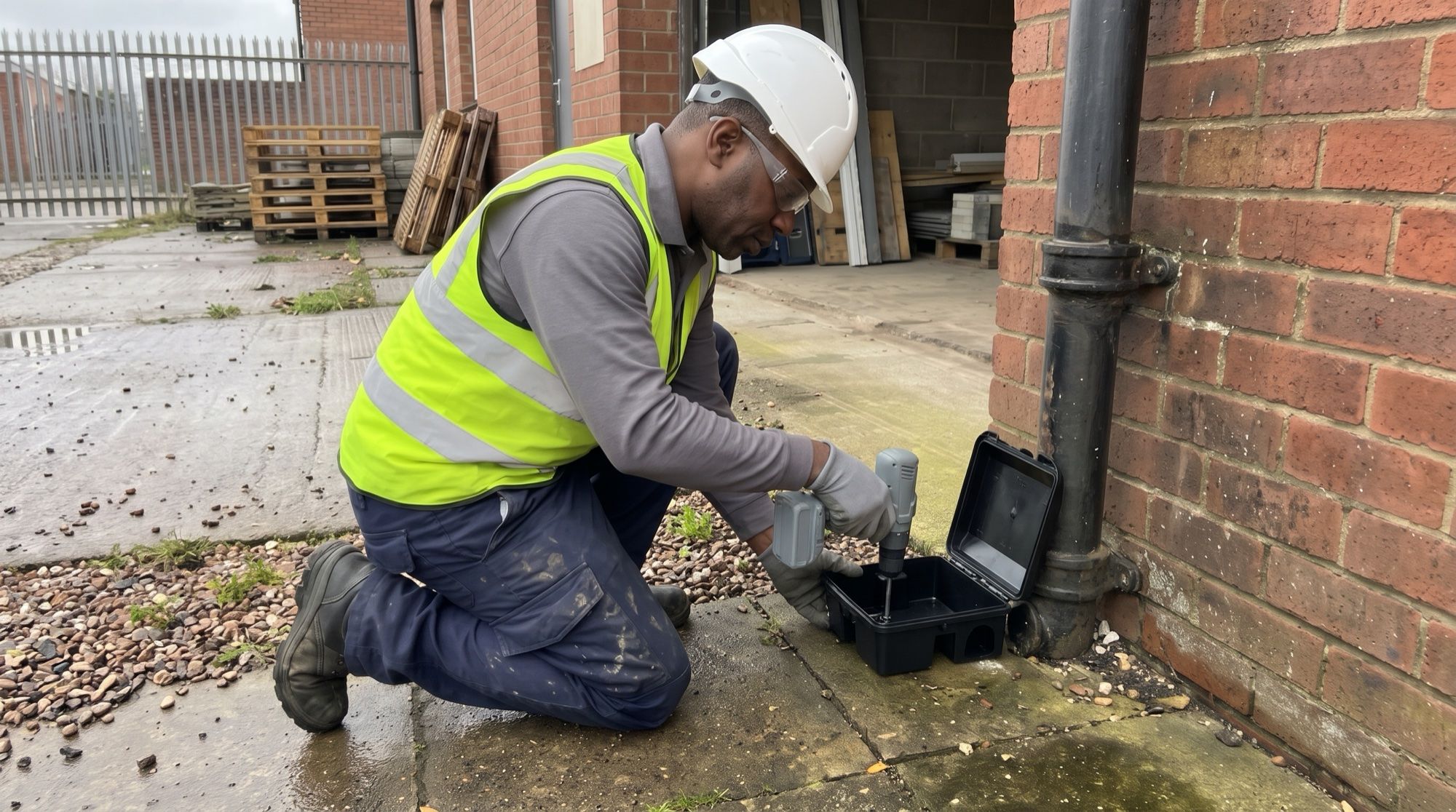
EnviroEx controls rats and mice at warehouses, food producers, hotels, venues and rented terraces across Trafford Park and Old Trafford. Each job starts with a survey of drains, docks and canal-side boundaries; fixed, tamper-resistant stations or traps follow, with entry points sealed and a written report every visit. Book a prompt survey by phone or enquiry form.
Why do rats and mice do so well around Trafford Park?
Three conditions meet on the estate. Canal water lines almost its entire boundary, with the Bridgewater on two sides and the Ship Canal on the other two, so brown rats have banks, culverts and outfalls within reach of many units. Food has been processed here for more than a century, and a store of grain, cereals or packaged goods anywhere on a site gives rodents a reason to stay. And around 1,400 businesses share the park, which means a great many yards, skips, pallet stacks and roller doors side by side.
Mice tend to be the indoor problem. They arrive in deliveries or through gaps at the foot of cladding, then settle into racking, suspended ceilings and dry stores, breeding steadily in the warmth. Rats usually start as an outdoor problem, burrowing beside docks, under portable cabins and around bin compounds before they find a way in.
What do we typically find on warehouse and food sites?
On a first survey here, the evidence usually clusters in a handful of places:
- the void behind dock levellers and under dock shelters
- gaps where wall cladding meets the floor slab, especially on older sheds
- broken or uncapped yard drains and loose interceptor covers
- pallets and baled cardboard stored against an outside wall
- staff canteens and vending points, often the only food in a non-food building
- cable and pipe entries into plant rooms and offices
For food producers and food stores, every rodent finding belongs in the pest-management records kept alongside your HACCP plan, with what was done about it. Customer audits and environmental health officers ask for the same core evidence: a station plan, visit reports, trend data and proof that recommendations were closed off.
What about hotels and venues around the ground?
In spring 2025, according to Football365, inspectors recorded mouse activity in seven areas of the stadium, hospitality suites included, with droppings beneath a buffet bar. Hotels, function rooms and match-day caterers near the ground face the same challenge: rooms that sit unused for days, then fill with food and people for a few hours.
For these clients we time checks around fixtures and events, look hardest at fixed bars, banqueting stores and service corridors, and keep rodenticide out of any area where food is prepared or served, relying on enclosed traps there instead. Our food premises pest control service covers the inspection side in more depth.
Terraces, The Village and the regeneration area
Outside the business units, most rodent work is residential. When slum clearance reached Old Trafford, residents favoured renovation over demolition, so many Victorian terraced streets survive, and houses of that age tend to have shared drain runs, underfloor voids and roof spaces that connect along the row. Trafford Park Village, cut back to its largest 84 houses by demolitions in the 1970s and 1980s, needs the same drain-first approach. In both, the survey follows activity back to the drain or adjoining land before treatment is chosen, and landlords receive a report that separates building defects from housekeeping.
Around 15,000 homes are expected across the 370-acre regeneration area planned around a new stadium. Clearance and groundworks on that scale unsettle established colonies, so contractors benefit from surveys before demolition and residents nearby from early drain checks.
How does a rodent job run here?
The method follows our standard rat and mouse control process, adjusted to each site:
- A survey inside and out, covering drains, docks and boundaries, that confirms whether you have rats or mice.
- A written plan showing station positions, proofing needs and anything we need from your staff or tenants.
- Treatment with fixed tamper-resistant stations or traps, chosen after a site risk assessment.
- Proofing of entry points, or photographs and a written note where the repair falls to a landlord or contractor.
- Follow-up visits, normally seven to ten days apart, until there is no fresh activity, then a close-out report.
On shift-working sites we book visits around production and deliveries and follow your induction, permit and PPE rules. Many estate businesses then move onto a scheduled contract; our commercial pest control service explains how visit frequency is set by risk.
How can an estate unit keep rodents out?
A few site habits make the biggest difference here:
- keep roller doors shut between loads and fit brush or rubber seals along the bottom edge
- store pallets and baled cardboard away from walls, ideally behind a cleared perimeter strip
- cut back vegetation along fence lines, particularly on canal-side plots
- cap redundant drains and keep interceptor covers seated properly
- clean canteen and vending areas daily and empty internal bins at the end of each shift
Combined with proofing and monitoring, those habits are what keep a canal-side unit clear between visits.
What we see with rat & mouse control in Trafford Park & Old Trafford
- Between them, the Bridgewater Canal and the Manchester Ship Canal border almost all of Trafford Park, so a unit on the edge of the estate is as likely to see rats come from the bank and drains as from the building next door.
- The Co-operative Wholesale Society's 1903 flour mill and packing factory at Trafford Wharf are an early part of the estate's long record of food production, and any store holding flour, cereals or packaged food gives mice the steady supply and cover they need.
- Football365's account of a 2025 inspection, which recorded signs of mice across seven areas of the Old Trafford stadium including hospitality suites, shows how readily rodents settle in catering space left empty between events.
- Old Trafford's Victorian terraces have ageing drainage and roof spaces that often connect along a row, so a rat in one house is frequently a drain or neighbouring-property question rather than a single-house problem.
- Demolition and groundworks across the 370-acre regeneration area planned around a new stadium are likely to disturb established rat colonies and push some into neighbouring homes and businesses.
How the job runs
- 1
Survey and identification
We confirm whether it is rats or mice, map droppings, runs and gnawing, and trace the entry route through walls, voids, service ducts and drains.
- 2
Written treatment plan
You get a short plan setting out the method, where stations or traps will go, any proofing needed and what we need from you, your staff or your tenants.
- 3
Secure treatment
After a site risk assessment, tamper-resistant stations or traps go on active runs, with any rodenticide used in line with the product label and CRRU UK stewardship guidance.
- 4
Proofing and exclusion
Gaps around pipes, under doors, at airbricks and in drainage are sealed, screened or photographed and flagged for repair so the problem is not simply reset.
- 5
Follow-up and close-out
Return visits check activity, adjust placement and remove bait and bodies, finishing with a written report you can keep with your records.
Typical visits: Usually two to four visits: a survey and first treatment, then checks roughly every seven to ten days until activity stops. Food premises and larger sites often move onto a scheduled contract afterwards.
Safety: Rodenticide only goes inside locked, fixed, tamper-resistant stations or into voids children and animals cannot reach, and every station is marked on a plan. Where pets or young children share the space, we often use enclosed traps in those areas instead.
Rat & Mouse Control in Trafford Park & Old Trafford: questions we get asked
Can you bait the canal bank behind our Trafford Park unit?
Usually not. The bank and towpath beyond your fence normally belong to someone else, and rodenticide labels limit where outdoor bait can go, so we work on the land you control. That means tamper-resistant stations along your side of the boundary where the risk assessment supports them, proofing at doors, cladding and drains, and clearing harbourage such as overgrown fence lines. We note any burrows or activity we can see on the neighbouring land and tell you who to report it to.
How do you work around a warehouse or production site that runs 24 hours?
We plan visits around your shift pattern, deliveries and production runs rather than the other way round. Before the first visit we agree induction, permits, PPE and any no-go zones with your site or health and safety manager. Stations are numbered and fixed down, so they stay put when forklifts and cleaning machines pass, and nothing toxic goes near open product or packing lines. Each visit produces a report your quality team can file, including any action we need from your staff.
Our function suite near the ground only fills on event days. How often should it be checked?
It depends on the risk, but quiet spaces need more attention than their footfall suggests, because mice settle quickly into suites, bars and stores left unused for several days. For venues tied to fixture and event calendars, we usually suggest a check shortly before major events and another soon after, with routine visits in between. Fixed bars, banqueting stores and service corridors get the closest look. Every visit is written up, so you can show an inspector what was checked and when.
Will the regeneration works bring rats onto our street?
They can. Demolition, drain diversions and groundworks disturb rats living in old sewers, foundations and yards, and some move into nearby property. Around the regeneration area, the sensible steps are to check that your own drains, rodding points and inspection covers are sound, proof airbricks and gaps around pipes, and keep yards clear of rubbish. If you notice droppings, gnawing or fresh burrows, act early: a small, recent infestation clears faster than one that has had a season to grow.
Will one mouse sighting affect our food hygiene rating?
Not automatically. The inspector scores what they find on the day across food hygiene and safety, the condition of the structure and confidence in management. A sighting that was reported, treated, proofed and recorded shows your controls working. Live activity, droppings near food, gaps left open or missing pest records count against you, and where there is an imminent risk to health the council can close premises with a hygiene emergency prohibition notice. Early action and a clear paper trail make the difference.
Who pays for rat control in a rented property, the landlord or the tenant?
It depends on the cause and the tenancy. In most tenancies, section 11 of the Landlord and Tenant Act 1985 makes the landlord responsible for keeping the structure, exterior and drains in repair, so rodents getting in through defects usually fall to the landlord. The Homes (Fitness for Human Habitation) Act 2018 also requires the home to be fit to live in. Where an infestation comes from how a tenant stores food or rubbish, the tenancy agreement may put the cost on them. We can report directly to the landlord or managing agent.
Do I have to report rats to the council?
The Prevention of Damage by Pests Act 1949 requires the occupier of land, other than agricultural land, to tell the local authority in writing if they know rats or mice are living on or visiting it in substantial numbers. The council can then require treatment or structural work. Whether your situation meets that threshold depends on the circumstances: a few droppings in a store room is not the same as an established colony. A treatment plan backed by written visit records shows the problem is being dealt with.
More in Trafford Park & Old Trafford
Last updated: