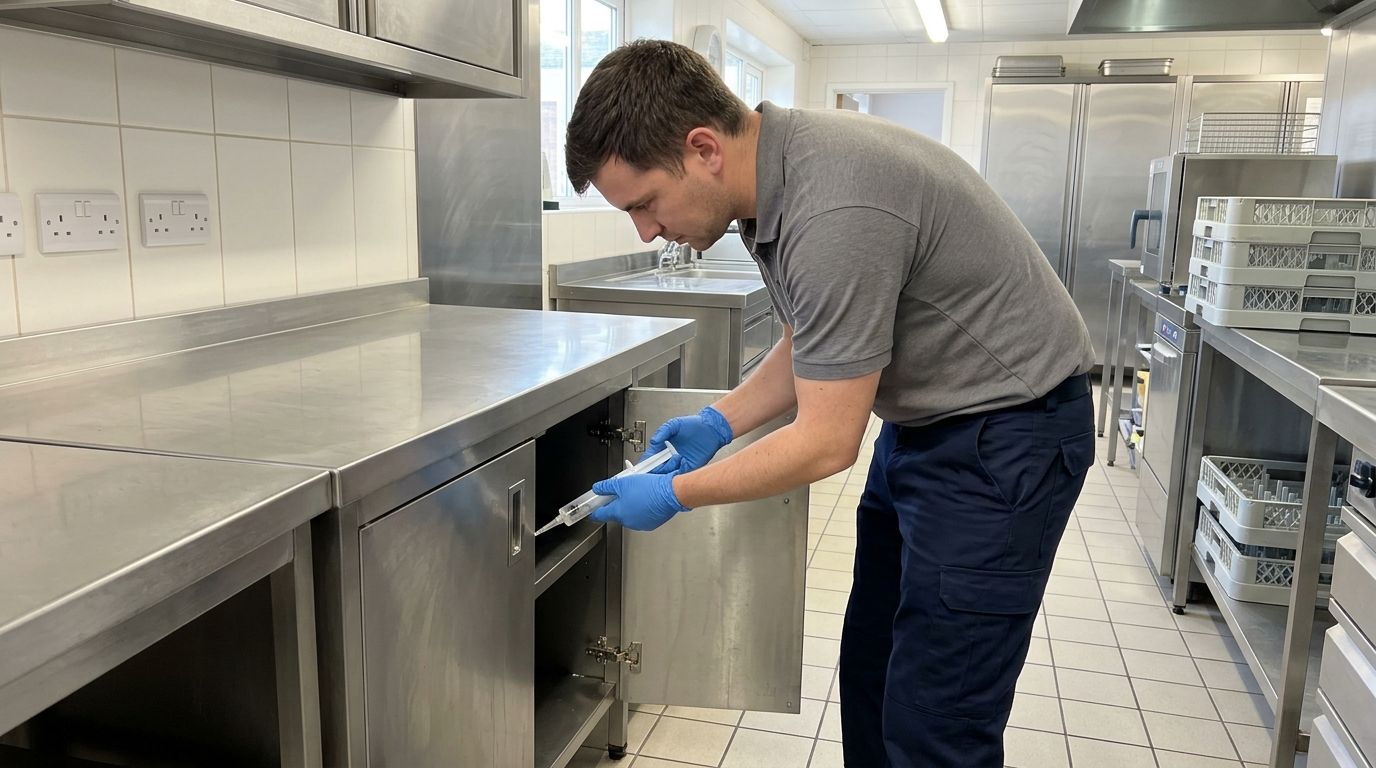
EnviroEx deals with German and Oriental cockroaches across Manchester restaurant and hotel kitchens, takeaways, healthcare sites, managed blocks and rented flats. We map activity with monitors, bait the harbourage with gel, keep sprays for where they are needed and return until the monitors stay clear, reporting in writing each time. Call or send an enquiry for a prompt survey.
Why do cockroaches do so well in Manchester buildings?
Cockroaches settle where heat, water and leftover food meet in corners nobody cleans often, and Manchester’s mix of late-trading kitchens and connected housing supplies all three. The city centre has a good stock of hotels and many nightclubs, with kitchens, bars and glass washers running late into the night. Across the city, more than a quarter of households live in purpose-built flats and almost 4% in converted or shared houses and bedsits. In buildings like these, heating pipes, service risers and shared ducts link one home or business to the next, so an infestation can spread through the structure without anyone carrying it.
Which Manchester premises are most at risk?
Food and hospitality come first. Restaurant, hotel and takeaway kitchens are where German cockroaches are found most often, sheltering in motor housings, door seals and the voids behind fixed equipment. A 2015 local news report quoted a pest firm’s view that most city-centre takeaways had some kind of pest problem. Whatever the true share, late-trading kitchens with constant deliveries are among the hardest premises to keep clear.
Food retail and wholesale add a second route in: deliveries. Any shop, market trader or wholesaler taking in mixed cartons, crates and sacks should treat goods-in as a likely entry point, because cockroaches and their egg cases travel in packaging.
Healthcare is the third. Data released under freedom of information in 2015 showed 527 cockroach sightings in Greater Manchester hospitals across roughly five years, more than any pest apart from ants. Hospitals, care homes and clinics need treatment that works around infection-control procedures, patients and round-the-clock operation, with records that satisfy whoever audits them. That is the kind of site our commercial pest control contracts are designed for.
Where do Oriental cockroaches come in?
The larger, darker Oriental cockroach favours cool, damp places at or below ground level: cellars, drains, sub-floor voids and service ducts. Manchester averages roughly 806 mm of rain a year across about 140 rain days, and 28% of its households live in terraced houses, including older streets in Cheetham Hill that date from its textile-processing era. Terraces of that age often have cellars or suspended floors with voids beneath. Basement kitchens and cellar bars in the centre share the same conditions.
Oriental cockroaches are usually most visible in the warmer months, and they develop more slowly than German cockroaches, so monitoring after treatment runs longer. Treatment often leans on residual products and dusts in voids and drains, alongside gel.
What happens on a Manchester cockroach job?
We survey the kitchen or flat and the spaces around it: cellar, bin store, risers and adjoining units where access can be agreed. Monitors map the activity and confirm the species. For late-trading venues, visits are booked for the hours before opening.
Gel bait goes into the harbourage, with residual products or dusts only where the species and site call for them. Follow-up visits at planned intervals over several weeks check each monitor, refresh or change the bait and deal with young cockroaches from egg cases that hatch after the first treatment. We sign off when the monitors stay clear, and each report is laid out for the food safety file kept with your HACCP-based procedures, which an environmental health officer will usually ask to see.
In blocks we work stack by stack with the managing agent, with notice to residents and a log for every flat.
How do you keep cockroaches out afterwards?
- Inspect deliveries at goods-in and break cardboard down outside food rooms.
- Seal pipe runs where they pass through party walls, risers and the backs of units.
- Cap unused drains and gullies in cellars and yards.
- Deal with damp in cellars, plant rooms and under sinks.
- Keep monitors down after sign-off and record each sighting with a date and location.
- Agree with neighbours or the managing agent who acts if activity returns in a shared space.
For food businesses, our food premises pest control service keeps that monitoring going on a routine schedule.
What we see with cockroach control in Manchester
- More than a quarter of Manchester households live in purpose-built flats, so when one flat in a block with shared heating or service risers reports cockroaches, we ask the managing agent for access to the flats around it as well.
- Hospital pest logs released under freedom of information in 2015 recorded 527 cockroach sightings at Greater Manchester hospitals in roughly five years, second only to ants, which is why healthcare kitchens need monitored, documented programmes.
- City-centre hotels, bars and nightclubs run kitchens and glass washers late into the night, so treatment and follow-up visits there are usually booked for the hours before opening.
- Older terraces such as those in Cheetham Hill, dating from its textile-processing past, can have cool, damp cellars and sub-floor voids, the conditions Oriental cockroaches prefer.
How the job runs
- 1
Survey and identification
We inspect the places cockroaches shelter, such as motor housings, door seals, drainage and service ducts, place monitors to map activity and confirm the species.
- 2
Written treatment plan
You receive a plan covering the products and placement we will use, the preparation needed, and the cleaning or proofing that will make the treatment hold.
- 3
Targeted treatment
Gel bait goes into the cracks and voids where cockroaches feed and hide, with residual insecticide or void dusts used only where the site and species call for them.
- 4
Follow-up visits
We return at planned intervals to read the monitors, top up or rotate bait and treat nymphs hatching from egg cases that survived the first round.
- 5
Sign-off and records
When monitors show no further activity we close the job with a written report for your pest-management file or landlord records.
Typical visits: Usually an initial treatment and two follow-ups over roughly four to six weeks; heavy infestations and multi-flat blocks often need more.
Safety: Gel bait is placed in cracks and voids out of reach of children, pets and food. Where a spray is needed we protect food-contact surfaces and tell you how long to keep people and animals out.
Cockroach Control in Manchester: questions we get asked
Will Manchester City Council treat cockroaches in my home?
Many councils run a pest control service for residents, but what is covered, who can book and the charges all vary and can change, so check the council's own pest control pages before you book. If you rent from a council or housing association, report the problem to your landlord first. If you would rather book a private firm, phone or use the enquiry form and we will arrange a survey.
We run a takeaway below flats in Manchester. Who should arrange cockroach treatment?
Usually both the business and the building owner have a part to play. Around 1,770 Manchester households lived over a shop, office or hotel at the 2021 census, and in buildings like that the food business operator is responsible for its own unit, while cockroaches using shared drains, risers or the void between the kitchen ceiling and the flat above bring in the landlord or managing agent. Treating the kitchen alone can leave insects in those shared voids to reinfest it. We survey both sides where access can be agreed and give each party a report setting out what is theirs to do.
Can you treat a whole Manchester apartment block rather than one flat at a time?
Yes, and in blocks with communal heating or shared risers it is usually the approach that holds. We work with the managing agent to survey the affected stack and the flats either side, send residents preparation notes, book access in batches and keep a log for each flat. Flats we cannot get into are recorded, so the agent can follow them up rather than the infestation quietly returning from one untreated unit.
Are cockroaches worse in Manchester at certain times of year?
German cockroaches breed all year round in heated kitchens and flats, so the season makes little difference to them. Oriental cockroaches are more noticeable in the warmer months, when adults are active and may be seen in cellars, yards and ground-floor rooms. Sightings in late spring and summer in an older terrace or cellar bar often point to drains or a damp sub-floor void, which changes where we treat and how long monitoring continues.
How do you treat cockroaches in a hospital or care home kitchen?
With the same methods, adapted to the setting. Gel bait goes into sealed voids and equipment housings away from patients and food, sprays are kept to a minimum and timed with the facilities and infection-control teams, and work is phased so kitchens and wards keep running. Every visit is recorded with products, locations and findings. Freedom of information data has shown cockroaches among the pests most often logged in Greater Manchester hospitals, so these programmes need to stand up to scrutiny.
How can I tell German cockroaches from Oriental cockroaches?
German cockroaches are small, around 10 to 15 mm, light brown, with two dark stripes on the shield behind the head. They cluster in warm spots such as dishwasher and fridge motors, behind cookers and inside equipment. Oriental cockroaches are larger, around 20 to 25 mm, glossy dark brown to black and slower, and they prefer cooler, damp places such as cellars, drains and ground-floor voids. If you are unsure, a clear photo or a specimen sealed in a bag lets us confirm the species before treatment.
Will a cockroach sighting lower our food hygiene rating or close us down?
It depends on what the inspector finds and how you have responded. Pest control is scored under the condition of the premises, and weak procedures can also lower the food safety management score, so activity is likely to affect your Food Hygiene Rating Scheme rating. Where an infestation poses an imminent risk to health, an authorised officer can serve a hygiene emergency prohibition notice that closes all or part of the business straight away; some operators choose to close voluntarily first. A contractor in place, a written treatment plan and up-to-date records put you in a far stronger position.
Why do cockroaches keep coming back after we spray?
Household sprays kill the cockroaches they touch, but most of the colony is hidden in voids the spray never reaches, and many sprays repel insects so they scatter further into the building. Egg cases also protect the developing young from most products, so nymphs hatch weeks later and the problem appears to return. Spray residue can stop professional gel bait being taken, too, which is why we ask clients to stop spraying before we treat.
More in Manchester
Last updated: