EnviroEx provides pest control for restaurants, bars, cafés, food-hall traders, hotel kitchens and takeaways in Manchester City Centre. We survey promptly, usually outside service, treat with methods suited to food rooms, proof entry points and leave records ready for a council food hygiene inspection. Call or send an enquiry to book a site survey.
What kinds of food business do we look after in the city centre?
Food premises here range from single-unit cafés to multi-trader halls. The Northern Quarter’s bars, cafés and music venues cluster around Oldham Street, just off Piccadilly Gardens. The Arndale has an 800-seat food court on its second floor alongside the Arndale Market, and Smithfield Market Hall, built in 1857 as a wholesale market and now Grade II listed, trades as a food hall. Piccadilly station has food and drink outlets on its concourse and more food outlets and bars on a second level. Add hotel kitchens and the food trade serving students along the Oxford Street and Oxford Road corridor.
Why do city-centre kitchens and bars get pests?
Rats have been the most visible pressure. Council figures reported in 2020 showed rat infestation reports more than doubling between 2015 and 2019, with Northern Quarter residents described as the worst affected. The causes blamed will be familiar to anyone running a city-centre kitchen: overflowing bins, litter, fly-tipping, open roadworks and empty buildings.
Water and old infrastructure add routes. The Rochdale, Ashton and Bridgewater canals all reach the centre, and the River Medlock runs mostly underground, including through a tunnel beneath the Castlefield canal basin. Brown rats use waterside banks, culverts and older drains as sheltered runs, and one cracked pipe in a basement kitchen can be enough to let them in.
Construction adds pressure. Demolition, groundworks and sewer diversions at the large schemes around the centre can displace established rats towards the nearest food.
The buildings matter too. Kitchens and bars in older converted buildings often share cellars, ducts and service voids with neighbouring units, and late trading keeps them warm and busy into the small hours, conditions that suit German cockroaches and mice.
What do we typically find?
- Basement kitchens and cellar bars: rats entering through defective drains, and mice using cable and pipe routes through ceiling voids.
- Late-night bars and venues: fruit flies and drain flies around glass washers and floor gullies, and cockroaches sheltering in warm equipment housings.
- Food halls and food courts: activity moving between units and back-of-house areas, so findings in one unit often point to a shared source.
- Yards and bin stores: rats feeding at split sacks, gulls tearing bags open and pigeons picking over spillage.
- Dry stores: stored-product insects arriving with flour, rice, spices and dried goods.
How does a job run in a city-centre food business?
We survey before service or after close. In shared buildings we arrange access with the landlord, centre management or building manager to the basements, risers, service corridors and yards that serve your unit, because the source is often outside the area you control. In food halls and shopping centres we work alongside the site’s common-area contract and share any finding that points to a shared source.
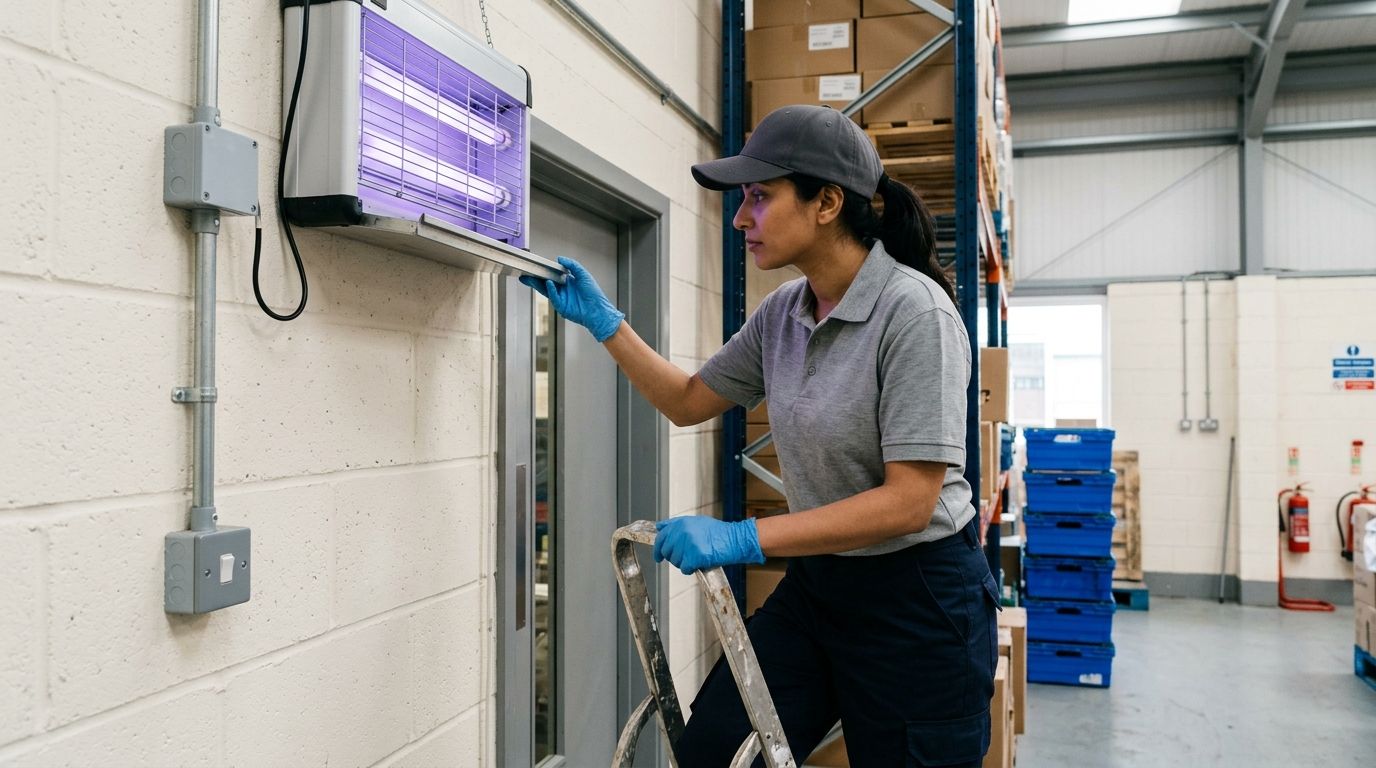
Treatment follows our standard food-room approach: traps and monitoring for rodents indoors, gel baits for cockroaches, insect light traps once fly breeding sites are dealt with, and any rodenticide held in locked, tamper-resistant stations in external or non-food areas, numbered on a site plan and used in line with the CRRU code. Proofing and a prioritised list of fixes follow, with photographs you can pass to your landlord where the defect is in a shared area.
Follow-up visits continue until activity stops, and many businesses then move to a routine inspection contract with a frequency set by risk. A basement kitchen beside a construction site needs more attention than a ground-floor café with sound proofing.
How can city-centre food businesses stay inspection-ready?
- Keep bins lidded and sacks off the yard floor between collections, and raise overflowing or damaged shared bins with the landlord in writing.
- Keep back doors to yards and service corridors shut when not in use, with brush strips or door sweeps fitted.
- Check deliveries before they go into the dry store and break down cardboard away from food rooms.
- Ask for external monitoring before nearby groundworks begin, rather than waiting for activity indoors.
- Keep the pest control file current: site plan, visit reports, actions closed, safety data sheets and a staff sightings log.
Where gulls and pigeons are working a terrace, canopy or loading area, waste control comes first and proofing second; our bird control service handles netting and spikes. Infestations that need more than routine visits are handled through our rodent control and cockroach control services.
What we see with food premises pest control in Manchester City Centre
- The Northern Quarter, centred on Oldham Street just off Piccadilly Gardens, grew up around the textile trade and is now known for its bars, cafés and music venues; in older warehouse buildings like these, cellars, ducts and drainage can link one unit to the next.
- The Ashton Canal leaves the Rochdale Canal at Ducie Street Junction, the Bridgewater Canal has its basin at Castlefield and the River Medlock runs largely underground through the centre, so kitchens near water and older drainage need sound drain fittings and external monitoring.
- Major schemes continue around the centre, including Victoria North, NOMA, St John's and Mayfield beside Piccadilly station, and demolition and groundworks of that kind can push rats towards the nearest kitchens, yards and bin stores.
- Multi-trader sites such as the Arndale's 800-seat food court and market, the food hall in the Grade II listed Smithfield Market Hall of 1857 and the food outlets at Piccadilly station put many operators close together, where pest control works best when it is coordinated with the site manager.
How the job runs
- 1
Site survey and risk review
We walk the kitchen, dry stores, cellar, bin area and service voids with you, identify the pest and its entry routes, and note what an inspector is likely to look at first.
- 2
Treatment designed for food rooms
Rodents are handled mainly with traps and monitoring, cockroaches with gel baits in cracks and voids, and any rodenticide is secured in tamper-resistant stations and recorded.
- 3
Proofing and housekeeping actions
We seal gaps around pipes, doors, drains and ducts, and give you a short, prioritised list of cleaning, storage and maintenance fixes with photographs.
- 4
Follow-up visits
Return visits check activity levels, adjust the treatment and confirm in writing when the infestation is under control.
- 5
Records and routine inspection
You receive a report after every visit and a site plan of monitoring points, and can move onto a routine inspection contract set by the risk on your site.
Typical visits: Most active infestations need two to four visits over two to six weeks; routine contracts for food businesses are set by risk and commonly run to around eight inspections a year or more.
Safety: In food rooms we favour traps, monitoring and gel baits placed away from food-contact surfaces; any rodenticide is locked in tamper-resistant stations, mapped and recorded in line with the CRRU code.
Food Premises Pest Control in Manchester City Centre: questions we get asked
Our city-centre hotel has a restaurant kitchen, bars and room service. Can pest control cover all of it under one plan?
Yes, and it usually should, because pests follow the routes food takes through a hotel: goods-in, stores, the main kitchen, service lifts, bars and floor pantries. We survey the whole chain once, number every monitoring point on a single site plan and report by area, so the head chef, the bar manager and the facilities team each see their own actions. One pest control file for the building is easier to show an inspector than separate records that do not match, and it makes a source in a shared basement or service lift quicker to trace.
We run a late-opening bar in the city centre. Why do fruit flies keep coming back?
Because they are usually breeding somewhere wet and out of sight. The common sources behind a bar are drip trays and the space under the glass washer, floor gullies and drain channels with a film of residue, empties waiting for collection, and spilt syrup or beer under fridges and ice machines. Fly killers catch adults but do nothing about the larvae, so we find the breeding site first, then advise on drain cleaning and on rinsing and storing empties away from the bar. Insect light traps with sticky boards then show whether numbers are falling.
Our kitchen is in a basement near the canal. Are we at greater risk of rats?
Being close to water and older drainage gives rats more opportunities, but how they get in matters more than how near the canal is. In basement kitchens the usual routes are defective drains, missing rodding-eye caps, unsealed pipe entries and floor gullies that have dried out. We check those first and, where drain activity is suspected, recommend a CCTV drain survey and, if needed, a non-return valve fitted to the drain. Sound drainage and proofing usually achieve far more than extra bait.
Rats appeared after demolition started next to our restaurant. How should we raise it with the developer?
Many councils run a pest control service for residents, but what is covered, who can book and the charges all vary and can change, so check the council's own pest control pages before you book. If you rent from a council or housing association, report the problem to your landlord first. If you would rather book a private firm, phone or use the enquiry form and we will arrange a survey.
Gulls and pigeons keep raiding our bins and outdoor seating. What can we legally do?
Start with the food: lidded bins, sacks kept off the ground, tables cleared quickly and no feeding. All wild birds, their active nests and eggs are protected under the Wildlife and Countryside Act 1981, so the next step is usually proofing, such as netting or spikes on ledges and canopies, rather than removing birds. In most cases lethal control is lawful only within the conditions of a licence such as Natural England's general licence GL41, and it is treated as a last resort after non-lethal measures.
Will one mouse sighting lower our food hygiene rating?
Not automatically. The inspector scores what they find on the day and how well you are managing it. A single sighting that was logged, reported to your contractor, treated and followed by proofing shows control. Droppings across the dry store, gnawed packaging and no records suggest the opposite, and can pull down the scores for the condition of the premises and for confidence in management. Where an officer judges there is an imminent risk of injury to health, they can serve a hygiene emergency prohibition notice, which takes effect at once and can shut all or part of the premises, so early action matters.
What will an environmental health officer ask to see about pest control?
Expect to be asked who manages pest control and how. In most inspections that means your contract or written arrangement, a site plan showing monitoring points and stations, recent visit reports, evidence that you acted on the recommendations, and safety data sheets for any products used on site. Officers also look at the building itself: gaps around pipes, door seals, fly screens, the bin area and dry stores. Our reports are laid out so they can be filed straight into your HACCP or Safer Food, Better Business records.
Do we have to close while you treat the kitchen?
Usually not. Most treatments are planned around service, early in the morning or after close, with food covered or removed and food-contact surfaces left clear. Traps and gel baits sit in voids and behind equipment, out of the way of staff. Closure becomes a question when an infestation is heavy enough to put food at risk. In that situation an officer may require it, or you may decide to close voluntarily while a deep clean and intensive treatment are carried out. We will tell you plainly if we think you are near that point.
More in Manchester City Centre
Last updated: