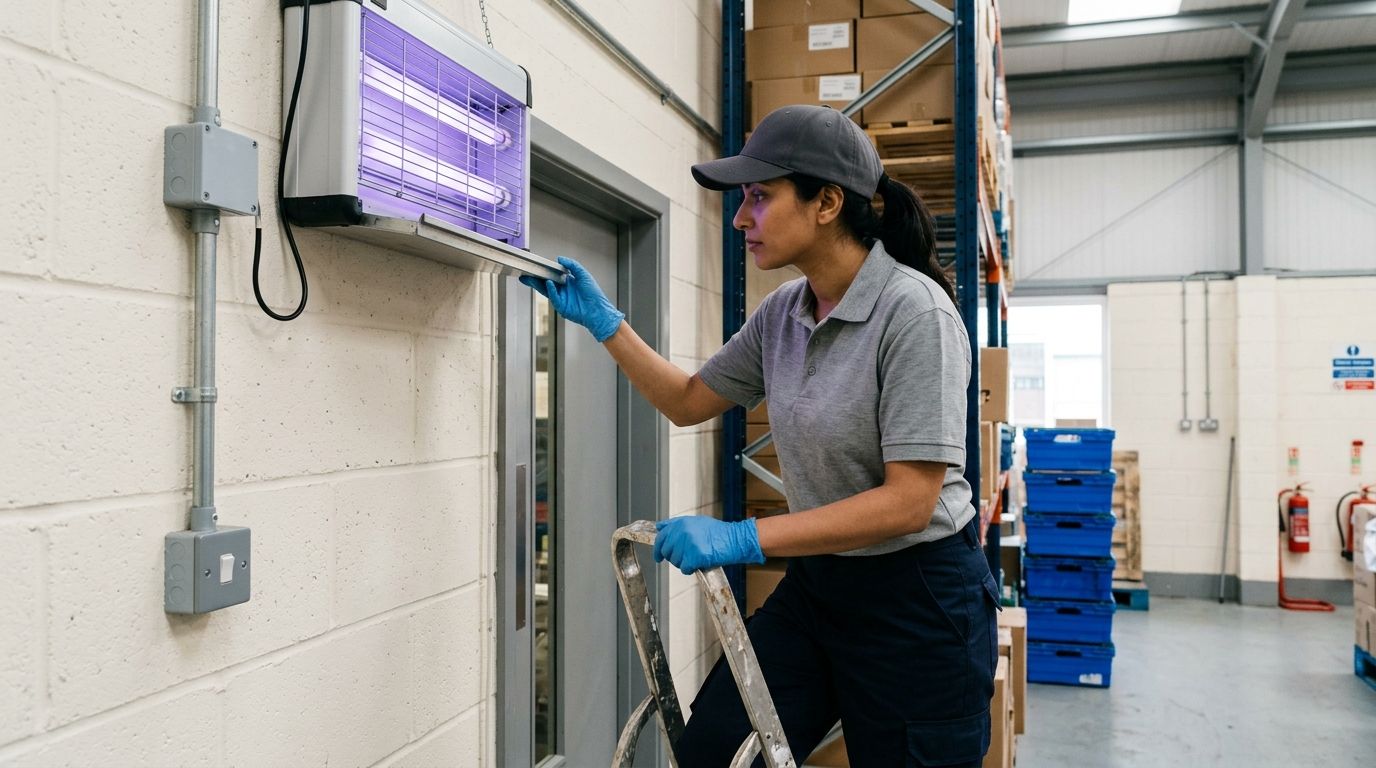
EnviroEx handles pest control for restaurants, cafés, bars and food traders in the Northern Quarter and Ancoats, including Stevenson Square, Thomas Street and the Ancoats mill streets. We survey kitchens, cellars and bag-out points, treat with food-safe methods, proof entry routes and leave records ready for an EHO inspection. Call or send an enquiry to book a prompt survey.
What makes a kitchen here different?
North of Piccadilly Gardens, kitchens and bars sit in a district dominated by pre-war buildings, including old warehouses and the shop buildings on Oldham Street, whose long-standing stores closed or moved as the Arndale was built in the 1970s. Few of these were designed with a commercial kitchen in mind. In Ancoats, food businesses trade among restored mills and newer mixed schemes, some of which, such as Sawmill Court, were planned with units for restaurants and cafés. Shared cellars, risers and drainage are common in older and mixed-use buildings, and they decide how far a pest problem spreads before anyone notices it.
How the area trades adds pressure. A district known for bars, music venues and nightlife keeps many kitchens and bars warm and busy late into the evening, which suits German cockroaches, and regular deliveries bring cardboard and crates through back doors that open onto back streets and alleys.
Then there are the multi-trader buildings. Where a café or food stall shares a building with dozens of independent traders, as at Afflecks, its pest control relies partly on how the building as a whole is run.
Why is the bag-out point part of the survey?
Waste handling is the most local issue on this patch. The council has gone to court over it before: in 2011 a nightclub operator off Oldham Street was fined after around 40 bags of bar waste built up behind the club, and the council warned that such waste can attract vermin.
For a food business the link is direct. Bags put out at close sit against the building for hours, split bags leave residue on the threshold, and rats feeding on the pavement look for shelter in the nearest gap, often around a back door, an air brick or a cellar grating. Gulls and pigeons that pull bags apart add fouling at the entrance.
How does a food premises job run here?
The survey walks the kitchen, bar, cellar, dry store and the route your waste takes to the pavement, looking at the site as an environmental health officer would. We identify the pest, trace its entry routes and note any that begin in a part of the building you do not control.
Treatment suits rooms where food is prepared and served. Indoors, rodents are dealt with mainly by traps and monitoring, and cockroaches by gel bait placed away from food-contact surfaces. Rodenticide is used only where justified, locked in tamper-resistant stations, numbered on a site plan and handled in line with the CRRU code. Proofing follows, with a prioritised list of actions and photographs, then return visits until activity is under control and confirmed in writing.
Visits are arranged before opening or after close. Where the source sits in a neighbouring unit, a shared cellar or a landlord’s riser, the findings are written up so you can take them to the building owner or managing agent. Most operators then move onto routine inspection, with frequency set by the risk we find; cellar kitchens, sites close to the canals and premises with a history of activity usually warrant more visits than a small café with sound proofing.
What should be on file before the inspector calls?
An EHO looking at a busy kitchen here will want to see pest control being managed rather than reacted to. In practice that means a current agreement with your pest contractor, a plan of monitoring points, visit reports, a note of what you did about each recommendation and your own sightings log. In the Northern Quarter it is worth adding your waste routine: when bags go out, where they are held until then and how the bag-out point is cleaned. Under the Food Hygiene Rating Scheme, pest control is scored as part of the condition of the premises, while your records feed into the officer’s confidence in how food safety is managed, so a tidy bag-out point and a current file both count on the day.
For cockroach problems in particular, our cockroach control page sets out the treatment in more depth, and our commercial pest control service covers the offices and shops that share these buildings, here and across Manchester city centre.
What we see with food premises pest control in Northern Quarter & Ancoats
- Check Manchester City Council's website for current pest control services and charges.
- Little Lever Street beside Stevenson Square has been singled out in local reporting for bagged waste and too few bins, which can raise the rodent risk around back doors on that stretch.
- In 2011 the council prosecuted the operator of a nightclub off Oldham Street over a build-up of bar waste it said could attract vermin, so waste housekeeping is a point an inspector may well raise.
- In Ancoats, schemes such as Sawmill Court were planned with units for restaurants, cafés and shops alongside rental flats, so a kitchen in a mixed scheme may share risers and bin stores with the homes around it.
- In multi-trader buildings such as Afflecks, where a café space sits among dozens of independent businesses, a food trader's pest control depends partly on how the whole building is managed.
How the job runs
- 1
Site survey and risk review
We walk the kitchen, dry stores, cellar, bin area and service voids with you, identify the pest and its entry routes, and note what an inspector is likely to look at first.
- 2
Treatment designed for food rooms
Rodents are handled mainly with traps and monitoring, cockroaches with gel baits in cracks and voids, and any rodenticide is secured in tamper-resistant stations and recorded.
- 3
Proofing and housekeeping actions
We seal gaps around pipes, doors, drains and ducts, and give you a short, prioritised list of cleaning, storage and maintenance fixes with photographs.
- 4
Follow-up visits
Return visits check activity levels, adjust the treatment and confirm in writing when the infestation is under control.
- 5
Records and routine inspection
You receive a report after every visit and a site plan of monitoring points, and can move onto a routine inspection contract set by the risk on your site.
Typical visits: Most active infestations need two to four visits over two to six weeks; routine contracts for food businesses are set by risk and commonly run to around eight inspections a year or more.
Safety: In food rooms we favour traps, monitoring and gel baits placed away from food-contact surfaces; any rodenticide is locked in tamper-resistant stations, mapped and recorded in line with the CRRU code.
Food Premises Pest Control in Northern Quarter & Ancoats: questions we get asked
Our waste bags have to sit on the pavement for collection. How do we stop them drawing pests to our door?
Control the timing and the place. Keep bagged waste in a lidded, rodent-resistant container indoors until shortly before collection rather than putting it out at close, double-bag anything wet or food-based, and avoid leaving bags against walls with gaps around pipes or air bricks. Rinse the bag-out spot after the lorry has been. Write the routine down and keep it with your pest control records: businesses have a legal duty of care for their waste, and an inspector who has seen torn bags outside will ask how you manage it.
We run a bar with a small kitchen. Do we need the same pest control as a full restaurant?
The legal duty is the same for any food business, but the plan can be scaled to the site. A bar serving small plates still has glass washers, ice machines, bottle coolers, floor drains and often a cellar, which between them suit German cockroaches, drain flies, fruit flies and rodents. We survey the bar, kitchen, cellar and bin area, then set a visit frequency that fits the risk we find. Visits can be booked before opening so they do not clash with service.
We run a food stall inside a multi-trader building. What can we control ourselves?
More than you might think. Keep stock in sealed, lidded containers off the floor, take cardboard outers away rather than storing them under the counter, clean down at close so nothing is left for night-time foraging, and keep a dated sightings log for your own pitch. We can place monitors in your space and report what they show, which gives you evidence to put to the building management if activity is coming from shared areas. As the food business operator, your own procedures are what an inspector will look at first.
Our restaurant is in a listed mill in Ancoats. Can you still proof the kitchen?
Usually, yes. Ancoats has been a conservation area since 1989 and several of its mills are Grade II* listed, and listed building consent can apply to internal works as well as the outside. Most kitchen proofing is reversible and touches modern fabric, such as sealing around newer pipework, fitting brush strips and kick plates, and meshing vents. We flag anything that would affect original brick, stone, timber or ironwork and suggest checking with the building owner and the council's planning team first. Our written findings can support any application.
Will one mouse sighting lower our food hygiene rating?
Not automatically. The inspector scores what they find on the day and how well you are managing it. A single sighting that was logged, reported to your contractor, treated and followed by proofing shows control. Droppings across the dry store, gnawed packaging and no records suggest the opposite, and can pull down the scores for the condition of the premises and for confidence in management. Where an officer judges there is an imminent risk of injury to health, they can serve a hygiene emergency prohibition notice, which takes effect at once and can shut all or part of the premises, so early action matters.
What will an environmental health officer ask to see about pest control?
Expect to be asked who manages pest control and how. In most inspections that means your contract or written arrangement, a site plan showing monitoring points and stations, recent visit reports, evidence that you acted on the recommendations, and safety data sheets for any products used on site. Officers also look at the building itself: gaps around pipes, door seals, fly screens, the bin area and dry stores. Our reports are laid out so they can be filed straight into your HACCP or Safer Food, Better Business records.
Do we have to close while you treat the kitchen?
Usually not. Most treatments are planned around service, early in the morning or after close, with food covered or removed and food-contact surfaces left clear. Traps and gel baits sit in voids and behind equipment, out of the way of staff. Closure becomes a question when an infestation is heavy enough to put food at risk. In that situation an officer may require it, or you may decide to close voluntarily while a deep clean and intensive treatment are carried out. We will tell you plainly if we think you are near that point.
More in Northern Quarter & Ancoats
Last updated: