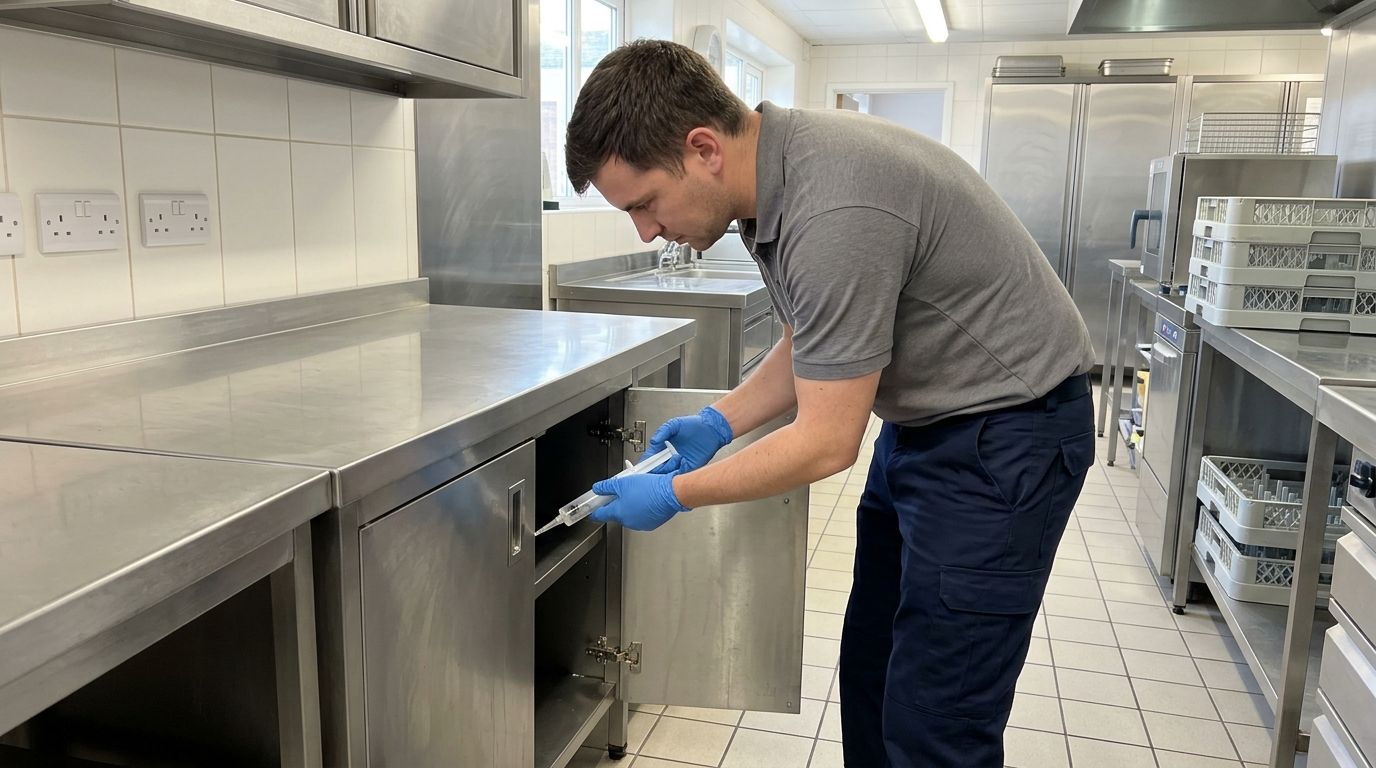
EnviroEx treats German and Oriental cockroaches in restaurant kitchens, bars, offices and apartment blocks across the Northern Quarter, Ancoats and New Islington. We survey the affected unit and connected voids, place gel bait, return over several weeks until monitors are clear and report in writing at each visit. Call or send an enquiry to book a prompt survey.
Why do cockroaches move so easily through buildings here?
Most of the Northern Quarter’s buildings went up before the Second World War, and some of its old warehouse and industrial buildings have since been converted into flats. Across Great Ancoats Street, mills such as Murrays’ Mills and Beehive Mill now hold apartments, offices and coworking space. In buildings like these, risers, boxed-in pipework, suspended ceilings and original drainage can connect a ground-floor kitchen to the units around and above it, and German cockroaches follow warm pipe runs readily. A colony that starts behind one dishwasher can surface in a flat two floors up or a tea point at the far end of an office corridor.
Oriental cockroaches behave differently. They prefer cool, damp places, so in older buildings they tend to show up in cellars, drains, lift pits and ground-floor voids, particularly where drainage is original or has been patched over the years.
Where do we usually find them in local premises?
In restaurant and bar kitchens the usual harbourage is equipment that runs warm through the night: glass-washer and dishwasher motors, ice machines, bottle coolers, the void behind a cooking line and the door seals on reach-in fridges. Bars with a small kitchen are easy to underestimate, because attention goes to the counter rather than the space beneath it.
In offices and coworking floors the problem usually sits in a shared kitchen, with cockroaches living behind the dishwasher or under a sink pedestal that nobody owns. In apartment blocks we look at kitchen kickboards, boiler cupboards, bath panels and the riser doors on each landing.
Outside matters too. Northern Quarter businesses put their trade waste out as bags on the pavement for collection, so the gullies and cellar gratings beside a bag-out point are checked on any survey where Oriental cockroaches are possible.
How does a cockroach job run in a shared building?
The first visit surveys the affected unit and anything linked to it that we can reach: risers, plant rooms, bin rooms and shared cellars. Monitors go down to show where activity is heaviest, and the species is confirmed before any product is chosen. You then receive a written plan setting out what will be used and where, the preparation that helps, and which neighbouring areas should be brought in.
Gel bait carries most of the load against German cockroaches, applied as small spots in cracks and voids kept clear of food and anything food touches. In cellars, drains and ducts, or where an Oriental population is heavy, a residual product or void dust may be added. Most jobs need a first treatment followed by two return visits across roughly four to six weeks, because egg cases protect the next generation from the first round. Shared buildings and blocks with several affected flats often need more. Each follow-up reads the monitors and adjusts the bait, and the job closes with a final report once the monitors stay clear.
Food businesses get reports laid out for a HACCP or Safer Food, Better Business file. Managing agents get a record of which flats and common areas were treated, so the block’s files show the whole picture rather than one complaint.
Keeping them out once the monitors are clear
Proofing counts for more than usual in converted buildings. Gaps where pipes pass through floors and walls, riser doors left open, unsealed kickboards and floor gullies that have dried out all need attention. In the listed mills of the Ancoats conservation area we use sealants and fillers that can be removed later without damaging historic fabric, and we flag anything that may need the owner’s agreement first.
Deliveries are the other way in. Cardboard outers, returnable crates and second-hand equipment can all bring cockroaches with them, so unpacking at the door and keeping cardboard out of the kitchen helps. Monitors left down after the job closes mean a new arrival shows up while numbers are still small. For kitchens that want this on a planned footing, our food premises pest control service builds cockroach monitoring into routine inspections, and the same approach applies to our work in Manchester city centre.
What we see with cockroach control in Northern Quarter & Ancoats
- Where a converted mill or pre-war building here combines kitchens, bars, offices and flats, its risers, boxed pipework and shared drainage can carry German cockroaches between units let to different occupiers.
- Bars and nightlife venues along Oldham Street and around Stevenson Square run glass washers, ice machines and bottle coolers, and the warm motor housings on that equipment suit German cockroaches.
- Northern Quarter trade waste is left out in bags on the pavement, so cellar gratings, gullies and drains beside bag-out points form part of the inspection, particularly where Oriental cockroaches are suspected.
- Several Ancoats mills are Grade II* listed within the conservation area, so the sealants and fillers we use to close gaps around pipes and skirting are chosen to come out later without harming historic fabric.
How the job runs
- 1
Survey and identification
We inspect the places cockroaches shelter, such as motor housings, door seals, drainage and service ducts, place monitors to map activity and confirm the species.
- 2
Written treatment plan
You receive a plan covering the products and placement we will use, the preparation needed, and the cleaning or proofing that will make the treatment hold.
- 3
Targeted treatment
Gel bait goes into the cracks and voids where cockroaches feed and hide, with residual insecticide or void dusts used only where the site and species call for them.
- 4
Follow-up visits
We return at planned intervals to read the monitors, top up or rotate bait and treat nymphs hatching from egg cases that survived the first round.
- 5
Sign-off and records
When monitors show no further activity we close the job with a written report for your pest-management file or landlord records.
Typical visits: Usually an initial treatment and two follow-ups over roughly four to six weeks; heavy infestations and multi-flat blocks often need more.
Safety: Gel bait is placed in cracks and voids out of reach of children, pets and food. Where a spray is needed we protect food-contact surfaces and tell you how long to keep people and animals out.
Cockroach Control in Northern Quarter & Ancoats: questions we get asked
We share a cellar and drainage with the bar next door. Is it worth treating only our side?
It is worth starting, but it rarely finishes the job alone. In the Northern Quarter's older buildings, cellars, drains and service voids can run beneath several units, and cockroaches ignore the lease line. We treat and monitor your side, record where activity appears to come from and give you written findings that your landlord or the neighbouring operator can act on. Connected units treated together, on one timetable, are far more likely to stay clear than two businesses treating separately.
Will you coordinate treatment across several flats in our Ancoats block?
Yes, and for German cockroaches that is usually the most effective approach. Mill conversions and new-build blocks share risers, boxed pipework and service voids, so one untreated flat can reseed its neighbours. We agree the scope with the managing agent, survey the affected flats and those beside, above and below them, plus bin rooms and risers, then treat and monitor on a single schedule. Residents receive preparation notes in advance, and the agent gets a report showing which flats were accessed, what was found and which still need entry.
Do you need access to risers, bin rooms and plant rooms as well as our unit?
Where we can get it, yes. In mixed-use buildings here the harbourage is often outside the unit that reported the problem: a warm plant room, a riser with open gaps at each floor, or a bin room where food waste waits before going out to the pavement. If those areas belong to the landlord or management company, we will tell you which ones we need and why, so you can arrange keys or an escort. We can treat only the space we can reach, but the report will note any areas left uninspected.
Does Manchester City Council treat cockroaches for residents here?
Many councils run a pest control service for residents, but what is covered, who can book and the charges all vary and can change, so check the council's own pest control pages before you book. If you rent from a council or housing association, report the problem to your landlord first. If you would rather book a private firm, phone or use the enquiry form and we will arrange a survey.
How can I tell German cockroaches from Oriental cockroaches?
German cockroaches are small, around 10 to 15 mm, light brown, with two dark stripes on the shield behind the head. They cluster in warm spots such as dishwasher and fridge motors, behind cookers and inside equipment. Oriental cockroaches are larger, around 20 to 25 mm, glossy dark brown to black and slower, and they prefer cooler, damp places such as cellars, drains and ground-floor voids. If you are unsure, a clear photo or a specimen sealed in a bag lets us confirm the species before treatment.
Will a cockroach sighting lower our food hygiene rating or close us down?
It depends on what the inspector finds and how you have responded. Pest control is scored under the condition of the premises, and weak procedures can also lower the food safety management score, so activity is likely to affect your Food Hygiene Rating Scheme rating. Where an infestation poses an imminent risk to health, an authorised officer can serve a hygiene emergency prohibition notice that closes all or part of the business straight away; some operators choose to close voluntarily first. A contractor in place, a written treatment plan and up-to-date records put you in a far stronger position.
Why do cockroaches keep coming back after we spray?
Household sprays kill the cockroaches they touch, but most of the colony is hidden in voids the spray never reaches, and many sprays repel insects so they scatter further into the building. Egg cases also protect the developing young from most products, so nymphs hatch weeks later and the problem appears to return. Spray residue can stop professional gel bait being taken, too, which is why we ask clients to stop spraying before we treat.
More in Northern Quarter & Ancoats
Last updated: