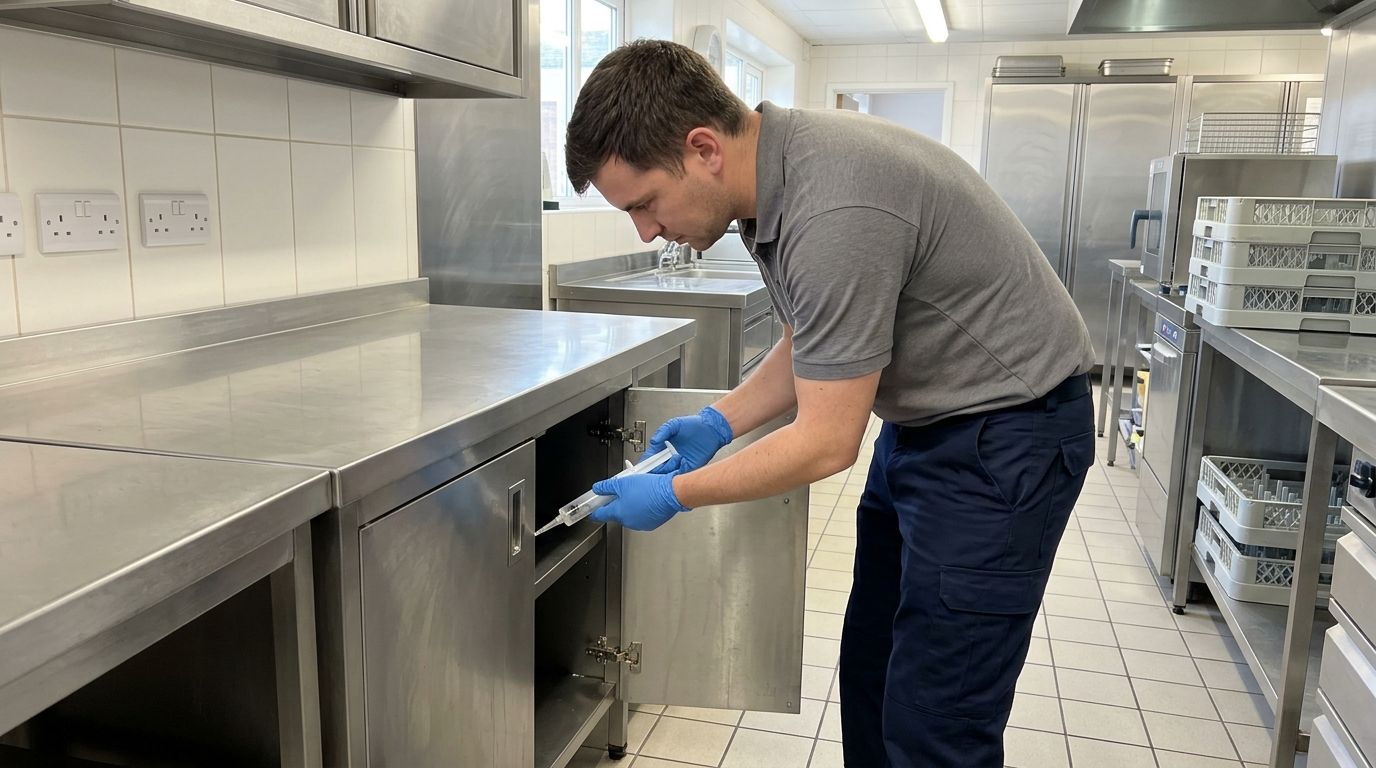
EnviroEx treats German and Oriental cockroaches in Manchester City Centre restaurant kitchens, food courts, hotels and apartment blocks, from the Northern Quarter to Spinningfields and Castlefield. We survey and monitor first, gel-bait the harbourage, return until activity stops and report in writing for your HACCP file. Call or send an enquiry to arrange a prompt survey.
Why do cockroaches persist in city-centre food premises?
Cockroaches need warmth, water and food, and city-centre catering supplies all three at close quarters. Smithfield Market Hall’s food hall, the Arndale’s food court and market, the food and drink outlets on two levels at Piccadilly station and the bars and cafes of the Northern Quarter put many kitchens close together. The Northern Quarter grew up as a textile warehousing district, and in older buildings like these, cellars, drains and wall voids can link neighbouring properties. Deliveries arrive throughout the day, and every cardboard outer, returnable crate or second-hand fryer is a possible way in.
German cockroaches are the usual finding in kitchens, bars and flats, where warm motor housings, glass washers and the voids behind stainless-steel units suit them. Oriental cockroaches favour cooler, damper places such as cellars, drainage gullies and ground-floor ducts, which is why basements in older buildings near the canals get a close look on every survey.
What we find in mixed-use conversions and towers
Some of the centre’s homes share a building with commercial floors; in Castlefield, one converted warehouse holds a restaurant, offices and flats. Where a kitchen or bar at street level and the flats above share risers, soil stacks and heating runs, an infestation reported on the fourth floor may have started in the ground-floor kitchen, or the other way round. In towers on the scale of Deansgate Square, whose four blocks hold 1,508 units, the same principle applies across bin rooms, service cupboards and corridors, and wherever older blocks share pipework or ducting, the survey covers the block rather than one flat.
In the flats themselves, the usual trigger is something brought in: second-hand appliances, furniture and packaging at the start of a tenancy. Every move into a rented flat is another chance for cockroaches to arrive with someone’s belongings, which is why changeovers are a good time to check.
How a city-centre cockroach job runs
The method is the same as on our cockroach control service: a survey with monitors laid out to show where the insects are and which species is present, a written plan, gel bait in the harbourage with residual products only where the site calls for them, follow-up visits until the monitors are clear, and a written sign-off. The local differences are about access and coordination.
Restaurants and bars are usually treated after the last service or before the first. Food-court units often need centre management to open service corridors, shared drains and ceiling voids. In mixed buildings we ask the managing agent to give access to risers and to notify residents, so that the affected flats and the commercial unit below are treated in the same round; treating one while the other waits tends to drive cockroaches into the untreated half of the building.
Expect the work to run over several weeks, because egg cases keep hatching after the first treatment. Oriental infestations in damp cellars usually take longer than German ones in a warm kitchen.
Keeping cockroaches out afterwards
- Check deliveries at goods-in and break down cardboard outers outside food areas.
- Seal pipe penetrations through old warehouse walls and floors, which are often far wider than the pipes running through them.
- Fit covers to redundant gullies and floor drains in basements.
- Keep shared bin stores clean and closed, and agree cleaning with neighbouring units.
- Leave monitors in place after sign-off and log every sighting.
For food businesses, all of this belongs in the pest-management file an Environmental Health Officer will ask for. Our food premises pest control contracts add monitoring between treatments and visit reports written to sit with your HACCP plan, and landlords of affected blocks can use our pest control for landlords service to coordinate treatment across tenancies.
What we see with cockroach control in Manchester City Centre
- The Arndale's 800-seat food court, Smithfield Market Hall's food hall and Piccadilly station, with food and drink outlets on two levels, each bring many food businesses under one roof, so treatment in one unit works best when neighbouring units and shared service areas are checked too.
- In Castlefield, converted warehouses include buildings that combine a restaurant, offices and flats; where uses share risers, soil stacks and drainage, German cockroaches can move between the kitchen and the homes above.
- In towers on the scale of Deansgate Square, whose four blocks hold 1,508 units, bin rooms, service cupboards and corridors are surveyed alongside the affected flats, because treating one flat at a time rarely clears a block.
- The Northern Quarter, centred on Oldham Street, packs bars, cafes and music venues into a former textile-trade district, and in older buildings like these, cellars and wall voids can connect neighbouring premises.
- Oriental cockroaches favour cool, damp cellars and drains, so in older basements near the canals and the largely underground River Medlock, drainage and gullies are part of every survey we carry out.
How the job runs
- 1
Survey and identification
We inspect the places cockroaches shelter, such as motor housings, door seals, drainage and service ducts, place monitors to map activity and confirm the species.
- 2
Written treatment plan
You receive a plan covering the products and placement we will use, the preparation needed, and the cleaning or proofing that will make the treatment hold.
- 3
Targeted treatment
Gel bait goes into the cracks and voids where cockroaches feed and hide, with residual insecticide or void dusts used only where the site and species call for them.
- 4
Follow-up visits
We return at planned intervals to read the monitors, top up or rotate bait and treat nymphs hatching from egg cases that survived the first round.
- 5
Sign-off and records
When monitors show no further activity we close the job with a written report for your pest-management file or landlord records.
Typical visits: Usually an initial treatment and two follow-ups over roughly four to six weeks; heavy infestations and multi-flat blocks often need more.
Safety: Gel bait is placed in cracks and voids out of reach of children, pets and food. Where a spray is needed we protect food-contact surfaces and tell you how long to keep people and animals out.
Cockroach Control in Manchester City Centre: questions we get asked
A guest at our city-centre hotel reported a cockroach in their room. What should we do?
Take the room out of use, keep the insect if you can and log where and when it was seen. In hotels, German cockroaches found in a bedroom have often travelled from a kitchen, bar, service lift or room-service pantry along shared risers, so we inspect the room, the rooms above and below on the same risers, and the food areas that serve them. Gel bait goes into the harbourage we find, monitors stay in place, and you receive a report for your records before the room is let again.
We let city-centre flats with frequent tenancy changes. How do we stop cockroaches arriving with new tenants?
Use each changeover as a checkpoint. Manchester's three universities had over 80,000 students between them in 2022, and frequent moves bring second-hand fridges, microwaves and furniture, which are common routes for German cockroaches. Inspect the kitchen behind appliances and under units while a flat is empty, ask incoming tenants to check second-hand appliances before they arrive, and leave sticky monitors in place. If monitors pick up activity in more than one flat on a riser, the managing agent should arrange a block survey rather than individual treatments.
Do cockroaches come in from the canals or the culverted River Medlock?
Not from the water itself. Oriental cockroaches live in drains, sewers and damp voids, and the cellars of older canal-side and riverside buildings can stay damp enough to suit them. They can travel along old drainage runs and come up through broken gullies or unsealed floor drains. That is why surveys here include basement drainage, redundant gullies and pipe entries at floor level, not only the kitchen. German cockroaches, the usual species in kitchens and flats, are far less tied to drains.
We are fitting out a new restaurant in a city-centre unit. Should we have a cockroach survey before opening?
It is worth it, particularly in a refurbished unit or one that previously traded food. A pre-opening survey checks voids, drainage and service penetrations while they are still accessible, and we can inspect second-hand catering equipment before it goes in. Monitors placed during the fit-out give you a baseline, and you open with a contractor, a site plan and a first report already in your pest-management file, ready for your first food hygiene inspection.
How can I tell German cockroaches from Oriental cockroaches?
German cockroaches are small, around 10 to 15 mm, light brown, with two dark stripes on the shield behind the head. They cluster in warm spots such as dishwasher and fridge motors, behind cookers and inside equipment. Oriental cockroaches are larger, around 20 to 25 mm, glossy dark brown to black and slower, and they prefer cooler, damp places such as cellars, drains and ground-floor voids. If you are unsure, a clear photo or a specimen sealed in a bag lets us confirm the species before treatment.
Will a cockroach sighting lower our food hygiene rating or close us down?
It depends on what the inspector finds and how you have responded. Pest control is scored under the condition of the premises, and weak procedures can also lower the food safety management score, so activity is likely to affect your Food Hygiene Rating Scheme rating. Where an infestation poses an imminent risk to health, an authorised officer can serve a hygiene emergency prohibition notice that closes all or part of the business straight away; some operators choose to close voluntarily first. A contractor in place, a written treatment plan and up-to-date records put you in a far stronger position.
Why do cockroaches keep coming back after we spray?
Household sprays kill the cockroaches they touch, but most of the colony is hidden in voids the spray never reaches, and many sprays repel insects so they scatter further into the building. Egg cases also protect the developing young from most products, so nymphs hatch weeks later and the problem appears to return. Spray residue can stop professional gel bait being taken, too, which is why we ask clients to stop spraying before we treat.
More in Manchester City Centre
Last updated: