In Manchester City Centre, EnviroEx handles bed bug cases for hotels, aparthotels, student blocks, managing agents, landlords and residents. A prompt inspection maps the affected room or flat and the units around it, followed by written preparation advice, a combined treatment and a planned second visit. Call or send an enquiry to arrange an inspection.
Which city-centre premises are most exposed to bed bugs?
In the city centre, bed bugs are mainly a problem for businesses that house people overnight or for a term at a time: hotels and aparthotels, serviced apartments and short lets, student accommodation, and the managing agents of large apartment buildings. Each handles a steady turnover of occupants and luggage, which is how bed bugs arrive.
The rebuilding that followed the 1996 bombing brought more people to live in the centre, many of them in apartments: warehouse conversions in the Northern Quarter and Castlefield, the 16-storey Leftbank Apartments overlooking the Irwell, and the Deansgate Square towers with 1,508 units between them. One managing agent may look after hundreds of homes linked by corridors, lifts and service risers.
Offices are a smaller part of the picture. Bed bugs occasionally arrive in bags and coats and settle in soft seating, and employers sometimes ask us to check a workplace after a member of staff finds them at home.
Why does the city centre see so many introductions?
Bed bugs travel with people, and the centre moves a great many of them. Manchester Piccadilly handled more than 27 million passengers in 2024/25, and the bus station at Piccadilly Gardens serves routes from across Greater Manchester, so luggage goes straight from trains and buses into hotel rooms and short lets.
Students add a seasonal peak. Manchester’s three universities had more than 80,000 students in 2022, many of them studying along the Oxford Street and Oxford Road corridor, and September arrivals and summer changeovers bring suitcases, bedding and second-hand furniture into student rooms within a few weeks. Large residential schemes planned or under way around the centre, including Victoria North, Mayfield and St John’s, add a steady flow of move-ins, and every move is a chance for bed bugs to arrive in a sofa, a bed frame or a box.
How does a bed bug job run in a hotel, student block or managed building?
We start by confirming the pest and mapping it. In a hotel that means the reported room and those either side, above and below; in a tower or converted warehouse, the flat plus the neighbouring units that share walls, floors or risers. Access, lift use and any permit-to-work rules are agreed in advance with the front desk, concierge or building manager.
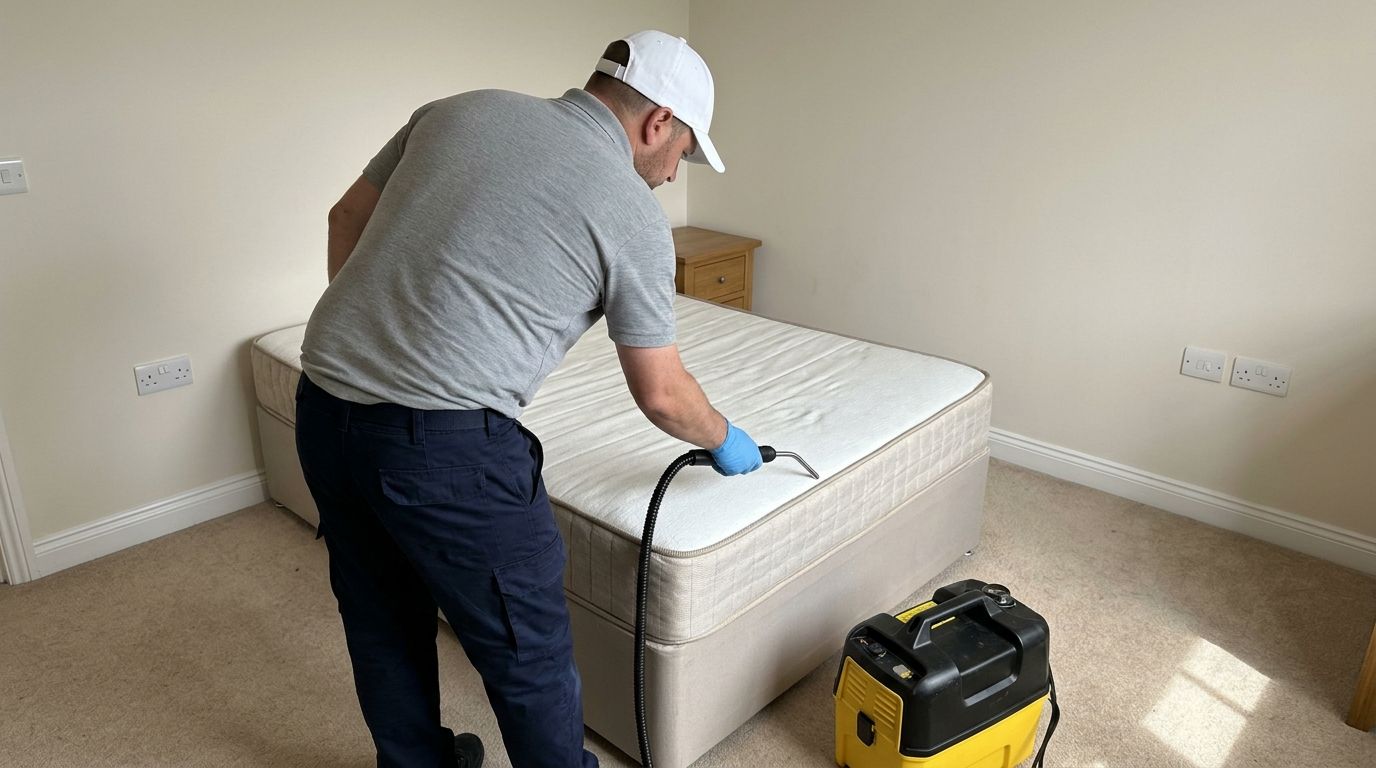
Treatment follows our standard bed bug method: written preparation guidance for the occupant or housekeeping team, then residual insecticide in joints and cracks, desiccant dust in voids and steam on mattresses and upholstery, with products chosen with resistance in mind. We return after two to three weeks for nymphs hatched from eggs laid before the first visit, and recommend releasing a room only when inspection finds no live activity.
Each visit produces a report listing the rooms or units inspected and treated, products used, advice given and what we found, ready for a duty manager or managing agent to file.
What should operators and landlords keep on record?
Hotels and serviced apartment operators should keep an incident log: the date of each report, the room, its status (out of service, treated, re-inspected, released) and the housekeeping checks made at each change. Student accommodation providers should add a note of move-in checks.
For let homes, pests are among the hazards assessed under HHSRS, and since the Homes (Fitness for Human Habitation) Act 2018 most tenancies in England require the home to be fit to live in at the start and throughout. Where several flats in one building are affected, the freeholder or managing agent is usually best placed to coordinate inspections, even when each landlord pays for their own flat. Our pest control for landlords service is set up for that kind of shared job.
What should city-centre residents do?
In an apartment building, never carry an unwrapped mattress or sofa through corridors and lifts or leave it in the communal bin store, and check second-hand furniture closely before it comes through the door.
How can city-centre premises keep bed bugs out?
No building can be proofed against bed bugs, so prevention means catching introductions early. Train housekeeping and cleaning staff to check mattress seams, headboards and bed bases at every room change, fit encasements in hotel and student rooms, and use interceptor monitors under bed legs in rooms with a history. In apartment buildings, give residents an easy way to report bites and agree in writing which units are inspected when a report comes in. Our commercial pest control service can add bed bug checks to a planned programme across a portfolio.
What we see with bed bug treatment in Manchester City Centre
- City-centre homes range from warehouse conversions in Castlefield and the Northern Quarter to the four Deansgate Square towers, which hold 1,508 units between them, so one infested apartment raises questions about the units beside, above and below it.
- Manchester Piccadilly handled more than 27 million passengers in 2024/25, and the hotels, aparthotels and short lets that take in those travellers turn rooms over constantly, which makes housekeeping checks at each changeover the main early warning.
- Manchester's three universities had more than 80,000 students between them in 2022, so September arrivals and summer changeovers bring a concentrated wave of luggage, bedding and second-hand furniture into student rooms.
- Several of Castlefield's restored canal and railway warehouses have been converted into apartments, and conversions like these can carry pipe runs and service risers between flats, giving bed bugs routes that cannot be seen from inside either home.
How the job runs
- 1
Inspection and confirmation
We check mattress seams, bed bases, frame joints, headboards, skirting, sockets and nearby furniture to confirm bed bugs and map how far they have spread, including adjoining rooms where relevant.
- 2
Written preparation guidance
You receive a preparation sheet covering what to launder at 60°C, what to bag, what to leave in place and why furniture should not be moved to other rooms before treatment.
- 3
First treatment
We treat harbourage with a combination of residual insecticide, desiccant dust in voids and steam on mattresses and upholstery, choosing products to work around known insecticide resistance.
- 4
Follow-up treatment
We return after two to three weeks to treat nymphs that have hatched from eggs laid before the first visit, and re-inspect every treated area.
- 5
Final check and report
When no live activity is found we close the job with a written report covering rooms treated, products used and advice given, ready for landlord or accommodation records.
Typical visits: Usually two treatment visits two to three weeks apart; heavy infestations, cluttered rooms and connected HMO rooms or flats can need a third visit or more.
Safety: People and pets stay out of treated rooms until surfaces are dry, usually a few hours, and we confirm the re-entry time for the product used. On mattresses and children's furniture we favour steam and only products whose label permits that use.
Bed Bug Treatment in Manchester City Centre: questions we get asked
A guest reported bites after checking out of our city-centre hotel. What should we do with the room?
Take the room out of service while it is checked, even if it has been let again since the stay. Record the dates, the room number and what the guest described, and keep any photographs they send. We inspect that room, the rooms around it and any room the guest moved to. Bites alone do not prove bed bugs, so a dated report helps either way: a clear inspection lets the room go back into use with a record behind it, and a positive one starts treatment straight away.
One flat in our city-centre block has bed bugs. Do other residents need to be told?
Usually only the residents whose flats need inspecting, and they need a reason to give access. We can draft a short notice for the managing agent explaining why an inspection is needed, what it involves and when, without naming the affected flat. In a tower that normally means the neighbours on the same floor and the flats directly above and below; in a converted warehouse, add the flats on the same risers. A calm, factual notice gets better access than rumour, and access decides whether the problem is contained.
How should a short-let or serviced-apartment host check a city-centre flat between guests?
Build a short check into every changeover. Lift the mattress corners and look along the seams and piping, check the headboard and the joints of the bed base, and look over the sofa if guests sleep on it. Dark spotting, pale shed skins or live insects mean the flat should not be relet until it has been inspected. Fitted encasements on the mattress and base make the check quicker, and a luggage rack away from the bed keeps cases off soft furnishings. Ask cleaners to photograph anything doubtful and send it to you the same day.
Can bed bugs spread through a city-centre office or co-working space?
They can be carried in on bags and coats, but offices are a poor long-term home because nobody sleeps there. When they do settle, it is usually in upholstered chairs, break-out sofas or rest rooms where people sit for long periods. If an employee reports bed bugs at home, we can inspect the areas they use, treat soft seating where we find evidence and give staff a short, factual note on keeping bags off shared seating, without disrupting the rest of the workplace.
How should a student accommodation provider prepare for the September move-in?
Inspect rooms before arrivals, starting with any that have a history of bed bugs, and fit encasements to mattresses so later checks are quick. Give new residents a short note on the signs and how to report them, and discourage second-hand mattresses and sofas. During the first weeks of term, ask cleaning staff to log anything that looks like dark spotting on bedding or mattress seams. Early reports mean one room gets treated rather than a whole corridor.
How do I know it is bed bugs and not fleas or mosquitoes?
Bed bug bites usually appear on skin exposed in bed, such as the face, neck, arms and shoulders, often in a line or small cluster. Flea bites tend to sit around the ankles and lower legs and usually point to a pet or a previous occupant's pet. The bites alone are not proof, though, because reactions vary and some people do not react at all. Look for evidence instead: small dark spots on mattress seams, rusty smears on sheets, pale shed skins or live insects. A clear photo or a specimen sealed in a bag lets us confirm before treatment.
Should I sleep in a different room if I have bed bugs?
In most cases, no. Bed bugs follow the person they feed on, so moving to the sofa or a spare room tends to spread the infestation into furniture that was clean. Keep sleeping in your own bed, with freshly laundered bedding and the bed pulled slightly away from the wall. Once treatment is in place, you sleeping there draws the bugs out across treated surfaces, which helps the treatment work. If you are in an HMO or a hotel, tell the landlord or manager rather than moving rooms yourself.
Do I need to throw my mattress away?
Usually not. Most mattresses can be treated, and fitting a zipped encasement afterwards traps any bugs left inside and makes future checks easier. Throwing a mattress out can make things worse if it is carried unwrapped through hallways and stairwells, shedding bugs and eggs on the way. If a mattress is badly damaged or heavily infested and you decide to replace it, wrap it fully in plastic before moving it, mark it as infested and arrange disposal promptly rather than leaving it in a shared bin store.
More in Manchester City Centre
Last updated: