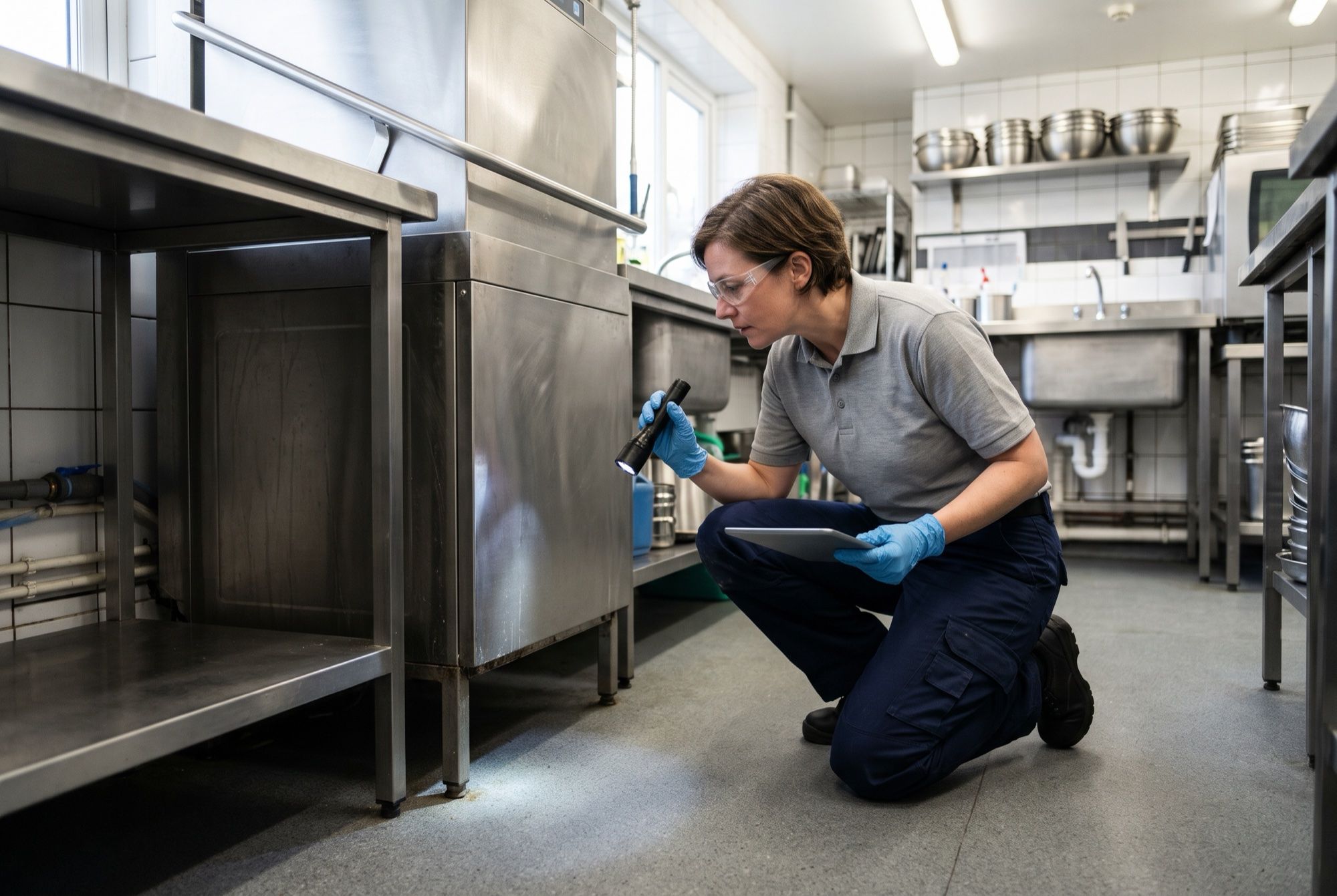
EnviroEx manages commercial pest control for offices, hotels, shops, logistics sites and managed blocks across Salford, from the Quays to Pendleton. We survey the building and its waterside or yard boundary, set visit frequency by risk, then treat, proof and report promptly, keeping records ready for EHO and audit checks. Phone or ask for a site survey to book.
Which Salford premises do our contracts cover?
The Quays is the obvious starting point. The old dock estate now provides over 10,000 jobs across offices including Soapworks and Quays Reach, the Golden Tulip and Copthorne hotels, the outlet shops and cinema at Quayside, and The Lowry, whose 1,730-seat theatre stands on Pier 8. Each building mixes kitchens, plant rooms, loading bays and public space, and each needs its own station plan.
Inland, the premises change character. Salford Royal is a large NHS hospital near the Eccles boundary, the University of Salford teaches a student population above 19,000, and shops trade from Salford Shopping Centre in Pendleton. In the wider city, Port Salford on the Ship Canal and Metroplex Business Park bring freight and business-park units into the picture.
What does each type of premises need from a contract?
- Quays offices. Where several tenants share a building, monitoring has to reach the common risers, raised floors and kitchenettes as well as each tenant’s space, because mice ignore lease lines.
- Hotels, venues and leisure. Kitchens and bars kept inspection-ready under food hygiene law, close checks on back-of-house waste after late events, and bed bug checks on guest floors where needed.
- Retail. Goods-in bays, stockrooms and back corridors, where deliveries, cardboard and communal bins come together.
- Hospital and university estates. Low-toxicity methods in occupied areas, rodenticide kept inside secured stations in service and plant rooms, and an audit trail the estates team can produce on request.
- Freight and industrial units. Perimeter stations along fences, dock-door and shutter checks, inspection of inbound goods and bird exclusion above loading canopies.
How do we set up a contract for a Salford site?
We survey the building and everything on its boundary: dock or canal edges, bin stores, drains, roofs and any common areas an estate manager or landlord controls. Your written scope lists the pests covered, visit frequency and exclusions, and a numbered site plan ties each tamper-resistant station and report entry to a location. We follow CRRU stewardship: non-toxic monitoring by default, with rodenticide used only where activity justifies it and withdrawn once control is achieved. Live infestations are treated first, and proofing is either carried out by us or photographed and passed to the landlord or managing agent responsible for repairs.
Reports are written for the file an environmental health officer, auditor or client will ask to see, including HACCP pest-management records for food areas and trend reviews for larger estates.
Why do Salford premises attract rats, birds and insects?
Water sets much of the pattern. The Irwell, heavily engineered and historically prone to flooding, runs along Salford’s Manchester side, and the Ship Canal forms the boundary with Trafford. Add the Quays basins (Erie, Huron and Ontario) and the Manchester, Bolton & Bury Canal near Pendleton. A site that backs onto any of these has a waterside edge where rats can burrow and move unseen, and where pigeons and gulls find ledges close to water.
Season matters as well. The council’s rats guidance warns residents they may notice more rats in the colder months, when food and shelter are harder to find, and that is usually when external stations and bin stores first show activity.
What about pigeons and gulls?
Under the Wildlife and Countryside Act 1981, pigeons and gulls are protected like any other wild bird. Killing them, or removing an active nest, is in most cases lawful only under a licence, after proofing and deterrence have been tried or judged unworkable. Our bird control service therefore starts with exclusion: netting across plant decks and light wells, spike strips or post-and-wire along ledges and signage, then fouling clearance. The council’s own pigeon proofing relies on spike strips; netting or post-and-wire covers the elevations where spikes are not enough.
The council’s August 2026 update reported more wild birds being found sick or dead in parks and by water, told residents to leave them alone and asked people not to feed birds in parks for the time being. On premises, that means discouraging feeding near entrances and making sure staff never handle a dead bird.
Landlords, managed blocks and homes
Managed housing here ranges from Salix Homes’ social housing in central Salford to tower blocks in Pendleton and the newer residential towers at the Quays. A July 2026 news report on a Lower Broughton block in Camp Street carried tenants’ complaints of rats, and of cockroaches in the bin rooms, going back four years; the landlord said it had an estate-wide baiting programme and was sealing the entry points it had identified. Refuse rooms, risers and car parks in blocks like this need one coordinated programme, which our pest control for landlords service provides.
For individual homes, the council runs a residential pest service, usually with next-day appointments, and tells tenants with rats to go to whoever manages their home first, whether a private landlord, a management company or a housing association. Householders who prefer a private contractor can book our domestic pest control service.
What we see with commercial pest control in Salford
- The old dock estate at the Quays supports more than 10,000 jobs today, and because its offices, hotels, outlet mall and The Lowry sit close to the dock basins, our surveys there take in the waterside edge as well as the building.
- For shops at Salford Shopping Centre in Pendleton, our monitoring concentrates on goods-in, stockrooms and back-of-house corridors, where deliveries, cardboard and shared waste meet.
- Port Salford, opened at Barton-upon-Irwell in 2016 as a Ship Canal freight terminal with its own rail connection, shows what logistics work in the wider city involves: long fence lines, loading doors open for hours and inbound goods to check for stored-product insects.
How the job runs
- 1
Site survey and risk assessment
We walk the building inside and out, including bin stores, drains, voids, plant rooms and goods-in, and assess the pest risks your operation creates.
- 2
Written scope and site plan
You receive a proposal setting out pests covered, visit frequency, methods by area and exclusions, with a numbered site plan for your pest control file.
- 3
Initial treatment and proofing
Any active infestation is treated first. Entry points are proofed by us or listed with photographs for your maintenance team or landlord.
- 4
Routine inspections
Scheduled visits check every monitoring point and high-risk area, record findings and adjust the programme to what the evidence shows.
- 5
Reporting and review
Each visit produces a written report, and we review trends with you so the visit frequency and station layout stay proportionate to the risk.
Typical visits: A survey, then routine visits set by risk, commonly between four and twelve a year, plus reactive visits whenever activity is reported.
Safety: Wherever people or non-target animals could reach bait, rodenticide is used only in fixed, tamper-resistant stations in line with the product label and CRRU stewardship; insecticide work is timed to protect staff, customers and stock, and safety data sheets are supplied for your COSHH records.
Commercial Pest Control in Salford: questions we get asked
Salford City Council offers business pest contracts. What should we compare before choosing?
Many councils run a pest control service for residents, but what is covered, who can book and the charges all vary and can change, so check the council's own pest control pages before you book. If you rent, report the problem to your landlord first. If you would rather book a private firm, phone or use the enquiry form and we will arrange a survey.
We run a hotel or venue at Salford Quays. How do visits fit around guests and events?
We plan them around your busiest periods rather than the other way round. Kitchens and back-of-house areas are usually inspected before service or after close, guest floors around check-out, and auditoriums or screens before doors open or between bookings. Waste from late events often sits overnight in yards and bin stores, so those areas get particular attention. Each report is addressed to the duty manager or facilities lead, with actions split between your team and anyone else responsible for the building.
Our Salford building is beside the dock basins or a canal. Do we need bird proofing as well as rodent control?
Often, yes. Waterside buildings give pigeons and gulls ledges, canopies and plant decks with water close by, and the same edges give rats cover. Because wild birds are legally protected, proofing comes first: a mix of netting, spike strips and post-and-wire matched to each elevation, with a check for active nests before any roost is closed off. After more sick and dead wild birds were reported in August 2026, the council told residents to leave them alone, and your staff should follow the same rule.
Rats seem to be coming from the street outside our Salford premises. Can the council help?
Council services and charges change, so check the council's own website for the current position, and if you rent, ask your landlord first.
Can you cover a logistics or industrial unit in the wider City of Salford?
Yes. Freight and distribution sites such as Port Salford, and units on business parks like Metroplex, need a programme built around the perimeter and loading areas: stations set along the fence line and external walls, dock door and shutter checks, inspection of inbound deliveries for stored-product insects, and bird proofing in canopies and high bays. If you are audited to a storage and distribution standard, tell us at survey and we align the reporting and trend reviews to it.
What does a commercial pest control contract include?
A survey, a written scope and a numbered site plan, then routine inspections at the agreed frequency, checks of every monitoring point, treatment of the pests named in the contract and a written report after each visit. The scope also sets out how reactive callouts between routine visits are handled and what is excluded. Larger proofing works, drain repairs and pests not named in the contract are usually quoted separately, and we make that clear at the start rather than afterwards.
How many routine visits a year will our premises need?
It depends on risk rather than a standard package. We look at what you handle, how the building is put together, what surrounds it and any history of activity. Offices and dry retail commonly need fewer visits than kitchens, food stores or warehouses holding food, and audited sites may need more again, with periodic in-depth inspections. We set the frequency at survey, explain the reasoning in the proposal and review it as evidence builds up, so it can come down as well as go up.
What will an environmental health officer expect to see from our pest control?
Usually a pest control file that shows a working system: a site plan with numbered monitoring points, reports from each visit, records of sightings and what was done about them, product details and safety data sheets, and evidence that proofing or housekeeping recommendations were acted on. Officers also inspect the premises themselves, so a tidy folder will not cover gaps under doors or droppings behind equipment. We write our reports with that inspection in mind.
More in Salford
Last updated: